


Average hotel room cleaning time: what it really takes
Published on
5 min read
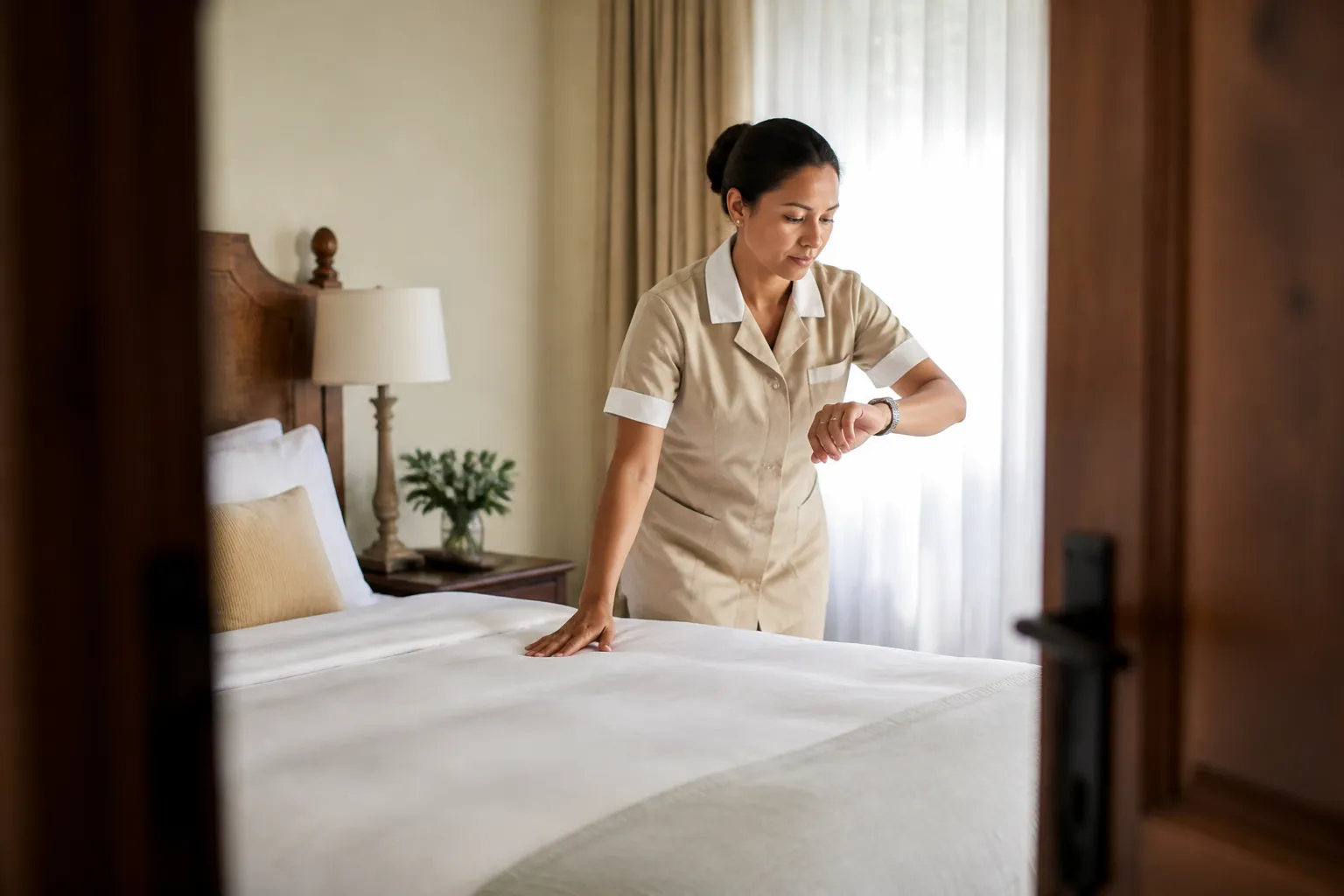
The average time it takes to clean a hotel room is one of the most common questions among hospitality managers: it is the basis for building shifts, sizing the housekeeping team and understanding whether it is under pressure or has some slack.
Contents
- How long a room really takes, on average
- The variables that stretch or shrink the time
- How many rooms a housekeeper cleans per day
- Cleaning a hotel room in under 20 minutes: when it’s realistic
- The role of training in cutting times without forcing them
- How to measure real times at your own property
- Organisational mistakes that stretch times for no reason
- Different times for hotels, farm stays and holiday homes
- Why chasing speed alone is a mistake
How long a room really takes, on average
For a standard room already cleared of waste and linen, a full turnaround typically takes between 20 and 35 minutes per person, final check included. The figure varies significantly depending on the type of service: a stay-over room takes less time than a departure room, where all the linen is changed and amenities and the minibar are checked. The time to change hotel bed linen alone accounts for around 4-6 minutes on a standard double bed, rising to 8-10 minutes for a king-size bed or two separate beds.
The variables that stretch or shrink the time
There is no single “right” time that applies to every property: it depends on how the room is set up and on what is expected from the team.
Type of stay and condition of the room
A departure room after a long stay almost always takes longer than a stay-over room used by a guest passing through for one night: more linen to change, more surfaces to restore, a higher chance of finding something out of place. A departure room after a single-night stay, on the other hand, is often the fastest to turn around: few personal items, little disorder, linen used only once.
Size, amenities and category of the property
Suites with a separate lounge, a terrace or a bathtub take longer than a standard double room, a suite with a living area can take as long as 45-50 minutes. The category of the property matters too: 4- and 5-star standards include extra checks on details (folding the bed corners, symmetrical placement of objects, no marks on mirrors and glass) that a 3-star hotel or a B&B does not apply to the same level of detail.
How many rooms a housekeeper cleans per day
With average times of 20-35 minutes per room and a working day organised into 6-7 hour shifts, a housekeeper typically turns around between 12 and 16 rooms a day, depending on the mix of stay-over and departure rooms and on the property’s standard. During peak season, with tighter shifts and a mix skewed towards departures, this number can drop to as low as 9-10 rooms without any loss of productivity: it simply means the work required per room was greater that day.
Cleaning a hotel room in under 20 minutes: when it’s realistic
Getting under 20 minutes is only realistic under specific conditions: an occupied room already tidy, a partial linen change on request, no amenities to restock. Applying the same target to a departure room after a long stay almost always means skipping steps in the final check: it’s the most common trade-off when times are compressed without reviewing the workload assigned.
The role of training in cutting times without forcing them
Part of the variability in times has nothing to do with the room and everything to do with who is cleaning it: an experienced, well-trained housekeeper is faster not because they rush, but because they don’t make mistakes that force them to go back and redo something. Investing in training on the operating sequence, rather than pushing for target times, is often the most sustainable way to get closer to the lower end of the range.
How to measure real times at your own property
Standard times are a starting point, not a figure to apply without checking. The most reliable way to know the real times at your property is to time a sample of different rooms (stay-over, departure, suites) over a week, also noting interruptions (calls, guest requests, blocked rooms). Cross-referencing this data with the number of rooms cleaned per shift makes it possible to build a realistic schedule instead of one based on industry averages that may not reflect your own property.
Organisational mistakes that stretch times for no reason
Delays often have nothing to do with how fast the team works and everything to do with organisation: trolleys not restocked at the start of the shift, supplies searched for room by room, floor routes that are not optimised and waste minutes in movement. Fixing these aspects before touching cleaning times themselves almost always produces a faster, more stable gain over time.
Different times for hotels, farm stays and holiday homes
The times given here are a reference for a standard hotel room. A farm stay with larger rooms, often with rustic furnishings and uneven surfaces such as exposed beams or terracotta floors, generally needs a few extra minutes for a room of similar size. Holiday homes and short-let apartments follow a different logic altogether: there is no continuous shift covering several rooms, but one full service on the whole property between guests, often squeezed into just a few hours between one check-out and the next check-in.
Why chasing speed alone is a mistake
Compressing the time to push up the number of rooms cleaned has a cost that shows up elsewhere: failed quality checks, negative reviews, staff turnover. Average times should be used to plan realistic shifts, not as a target to hit at any cost.
Setting realistic times is the first step towards a stable, efficient room cleaning service. Want an assessment of the times for your property? Get in touch for a free site visit.