


Breakfast room cleaning standards for hotels
Published on
5 min read
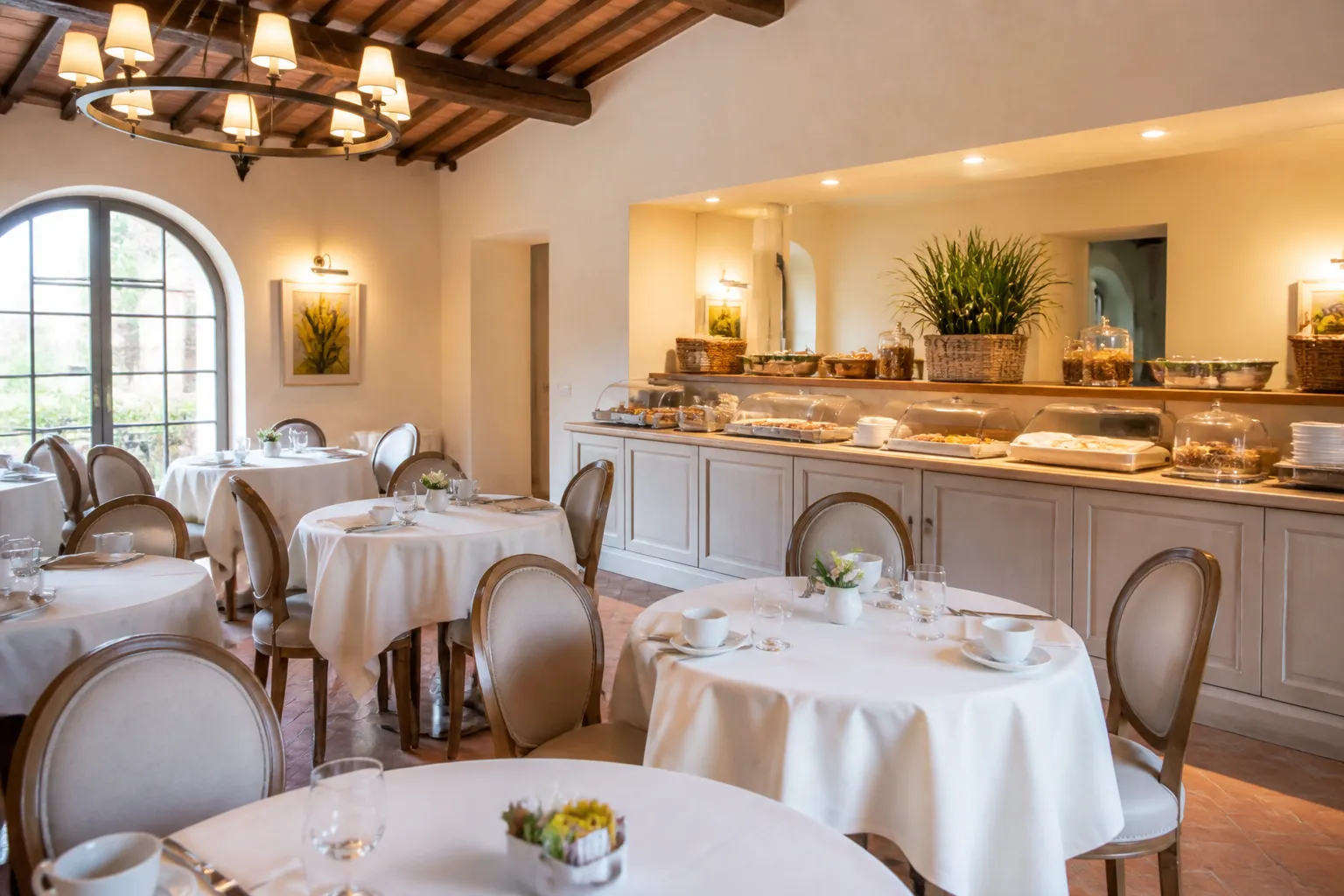
The breakfast room is the only common area where cleaning happens while guests are present: delivering it well takes a different rhythm from the rest of the hotel, and involves floor and waiting staff directly, not just the cleaning team.
Contents
- Before service
- During service
- Dedicated materials and equipment for the breakfast room
- Managing allergies and cross-contamination at the buffet
- Cleaning connected restaurants and bars
- Managing waste during service
- Coordinating with the kitchen on opening hours
- After service
- Weekly deep cleaning
- Training floor staff to work discreetly
- Adapting standards to multiple breakfast sittings
- A standard on show at every moment of the day
Before service
Before opening, tables, chairs, the buffet and floors need to be checked: surfaces sanitised, linen clean, crockery and cutlery free of residue, buffet temperature verified. This is the moment to deal with anything that takes time, because there will be none during service: fully restocking spare crockery, checking for faults in hot or cold equipment, and setting up lighting and table layout to match the expected number of covers.
During service
While guests are having breakfast, the floor team clears finished tables, restocks the buffet and deals with spills or crumbs the moment they appear. It cannot wait until the end of service: a visibly dirty table left for more than a few minutes affects how the whole property is perceived. A round every 10-15 minutes, following a fixed route between tables, catches most problems before they need chasing.
Dedicated materials and equipment for the breakfast room
Cloths, sponges and products used in the breakfast room should be physically kept separate from those used in bathrooms or guest rooms, for food safety reasons as well as hygiene. A dedicated trolley, with distinct colours for cloths used on food-contact surfaces versus those for floors or glass, cuts the risk of mix-ups, especially during the busiest moments, when staff are working faster than usual.
Managing allergies and cross-contamination at the buffet
A shared buffet is a sensitive point for guests with allergies or intolerances: dedicated serving utensils for each tray, clear labelling of key ingredients and a layout that physically separates gluten-free or dairy-free items from the rest all cut the risk of cross-contamination. Cleaning the buffet surfaces should also use dedicated cloths, never shared with the ones used on dining tables.
Cleaning connected restaurants and bars
When the breakfast room shares space with the hotel restaurant or bar, standards need to line up: cleaning the restaurant and cleaning the bar follow the same logic: visibly clean during service, deep cleaned outside opening hours. Switching from one service to another, for example from breakfast to lunch, calls for a full reset of the room in the shortest possible time.
Managing waste during service
A long breakfast service generates waste continuously: single-portion packaging, eggshells, fruit peel, used napkins. Emptying bins only at the end of service is a common but avoidable mistake: they should be checked and emptied several times during the morning, with spare bin liners always kept near the buffet so a visibly full bin is never left during service.
Coordinating with the kitchen on opening hours
Cleaning the breakfast room also depends on good communication with the kitchen: knowing in advance if service will run longer than planned, for example because of a delayed group, makes it possible to plan the next cleaning pass better instead of abruptly cutting off service for the last guests to arrive.
After service
Once breakfast ends, the job is complete: floors washed, carpets cleaned, tables and chairs reset, the buffet dismantled and sanitised. This is also the moment for carpet maintenance, since carpets are often placed in exactly these high-traffic areas, where coffee stains and crumbs build up faster than anywhere else.
Weekly deep cleaning
On top of daily cleaning, the breakfast room needs more thorough work on a weekly basis: degreasing hot buffet equipment, cleaning behind and under furniture that isn’t moved every day, checking vents and hood filters if any are fitted on site. These jobs should be scheduled for a low-footfall day or an extended slot outside service hours.
Training floor staff to work discreetly
Staff cleaning during service need to know how to work without interrupting guests’ breakfast: moving calmly, avoiding loud noises with crockery and trolleys, asking permission before clearing a table close to a seated guest. It’s a balance between speed and discretion that comes from practice more than from a written checklist.
Adapting standards to multiple breakfast sittings
Some properties run breakfast across multiple time slots to suit different types of guest, from an early-departing group to a traveller who sleeps in. Each slot should get a mini reset of the room (checking tables, topping up the buffet, checking floors) even if service never fully stops, so the last slot doesn’t inherit the wear built up during the earlier ones.
A standard on show at every moment of the day
The breakfast room is watched more closely than any other common area, because guests sit there for a while rather than just passing through. It is the standard behind the common areas cleaning part of our service for Tuscan hotels.
Even at a small property serving breakfast at the table rather than buffet-style, most of these principles still apply: the level of cross-contamination risk changes, but the need for a visibly well-kept room throughout service does not.
Getting the breakfast room right consistently also builds trust with returning guests, who often judge a property’s overall standards by how the first meal of the day is presented and maintained, well before they’ve formed an opinion about anything else the property has to offer that day of their stay.
Want help organising your breakfast room cleaning? Get in touch to talk it through.