


Cleaning vs sanitising vs disinfecting in hotels
Published on
5 min read
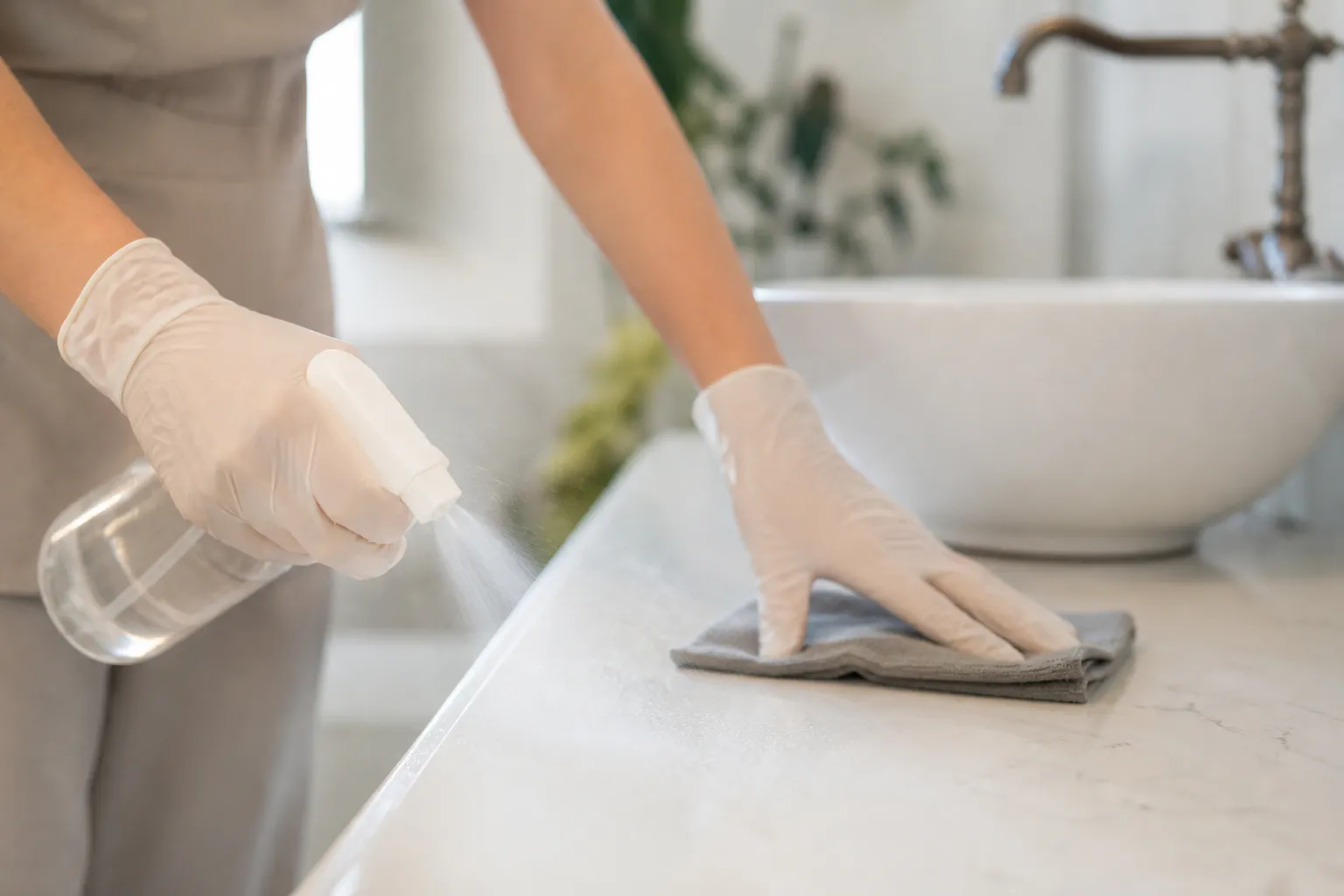
Cleaning, sanitising and disinfecting are often used as if they meant the same thing, but they are three different actions, with different goals, products and contact times. Confusing them in a protocol almost always leads to the wrong product being used, a step being skipped, or costs higher than necessary.
Contents
- Cleaning: removing visible dirt
- Sanitising: reducing the microbial load
- Disinfecting: targeted elimination of pathogens
- How long the effect on a room lasts
- Choosing the right product for the right job
- Terminology mistakes that confuse staff
- Training staff on the three levels
- What regulations say about disinfectant products
- The real cost of the three product categories
- A practical example to avoid confusion
- A clear protocol avoids mistakes
Cleaning: removing visible dirt
Cleaning is the physical removal of dust, residue and visible dirt from a surface, using water, detergent and mechanical action. It does not necessarily eliminate microorganisms: it prepares the surface so that sanitising or disinfecting, where required, can actually work. Skipping this step and going straight to a sanitising or disinfecting product on a surface that is still dirty drastically cuts its effectiveness, because organic soil neutralises part of the active ingredient.
Sanitising: reducing the microbial load
Sanitising reduces the number of microorganisms on a surface to a level considered safe, without necessarily eliminating all of them. In hospitality it is used for surfaces with frequent contact but no elevated biological risk: worktops, handles, room surfaces. It is the most common level of intervention in daily turnarounds, because it strikes a good balance between effectiveness, time and product cost.
Disinfecting: targeted elimination of pathogens
Disinfecting, using products registered as disinfectants (biocides), eliminates or inactivates specific microorganisms, including pathogenic viruses and bacteria. It requires the contact time stated on the product and is reserved for specific situations: after a case of infectious illness in a room, or in higher-risk areas such as shared bathrooms. Hotel bathroom disinfection in these specific situations follows a stricter protocol, with contact times that cannot be shortened, even when that means keeping the room out of service longer than usual.
How long the effect on a room lasts
None of the three actions has a permanent effect: sanitising a hotel room lasts until the first contact: a hand on the door handle, a guest sitting on the bed. That is why how often you clean matters more than how intense a single pass is. Many properties make the same mistake here: they invest in a more effective product but keep the same frequency as before, without ever getting a real improvement in how clean the guest perceives the room to be.
Choosing the right product for the right job
A professional disinfectant used everywhere, even where standard sanitising would be enough, is not more effective: it is just more expensive and often harsher on surfaces, with the risk of damaging delicate materials over time. The right choice depends on the actual risk in each area, not on one solution applied indiscriminately across the whole property.
Terminology mistakes that confuse staff
Many operational mistakes start as a language problem before they become a product problem: if a property uses the word “disinfect” to mean any kind of cleaning, staff will never learn to tell when a biocidal product is genuinely needed and when standard sanitising is enough. Defining the three terms in writing, with concrete examples drawn from the property itself, removes this ambiguity at the root.
Training staff on the three levels
Effective training on this topic doesn’t need hours of theory: a handful of practical examples (when to clean, when to sanitise, when to disinfect) repeated during the first weeks on the job and revisited periodically is enough. Staff who understand the “why” behind each product use it better than those who just follow an instruction without grasping the logic behind it.
What regulations say about disinfectant products
True disinfectant products, unlike sanitising detergents, are classified as biocides and must be registered under the relevant regulatory framework, with an authorisation number stated on the label. Buying products without this registration, perhaps to save money, exposes the property to a double risk: the declared effectiveness might not be real, and in the event of an inspection the property would not be able to prove it used a compliant product.
The real cost of the three product categories
Disinfectant products generally cost two to three times more than a good general-purpose sanitiser, precisely because of their targeted effectiveness and regulatory status. Using them everywhere, even where sanitising would be enough, therefore also means higher running costs with no real added benefit for the guest, who in most cases won’t notice any difference between the two levels of treatment.
A practical example to avoid confusion
A concrete case fixes the distinction better than any theoretical definition: wiping a bedside table with a damp cloth removes dust, sanitising it with a specific product reduces microorganisms to a safe level, disinfecting it after a guest reports a stomach bug eliminates the specific pathogens linked to that episode. Same piece of furniture, three different levels of action, three different moments when each one is the right call, and none of the three can genuinely replace the other two.
A clear protocol avoids mistakes
Distinguishing these three levels in cleaning protocols (and training staff to recognise them) is the first step towards a genuinely effective service. It is the approach behind our cleaning and sanitising service for Tuscan hospitality businesses.
Even a small property without a dedicated quality manager can apply this distinction simply: a laminated card with the three levels explained in a few lines, posted in the product store, works as a daily reminder for the whole team.
Want a review of your property’s protocols? Get in touch for a free consultation.