


Hotel cleaning cost per room: how it is calculated
Published on
5 min read
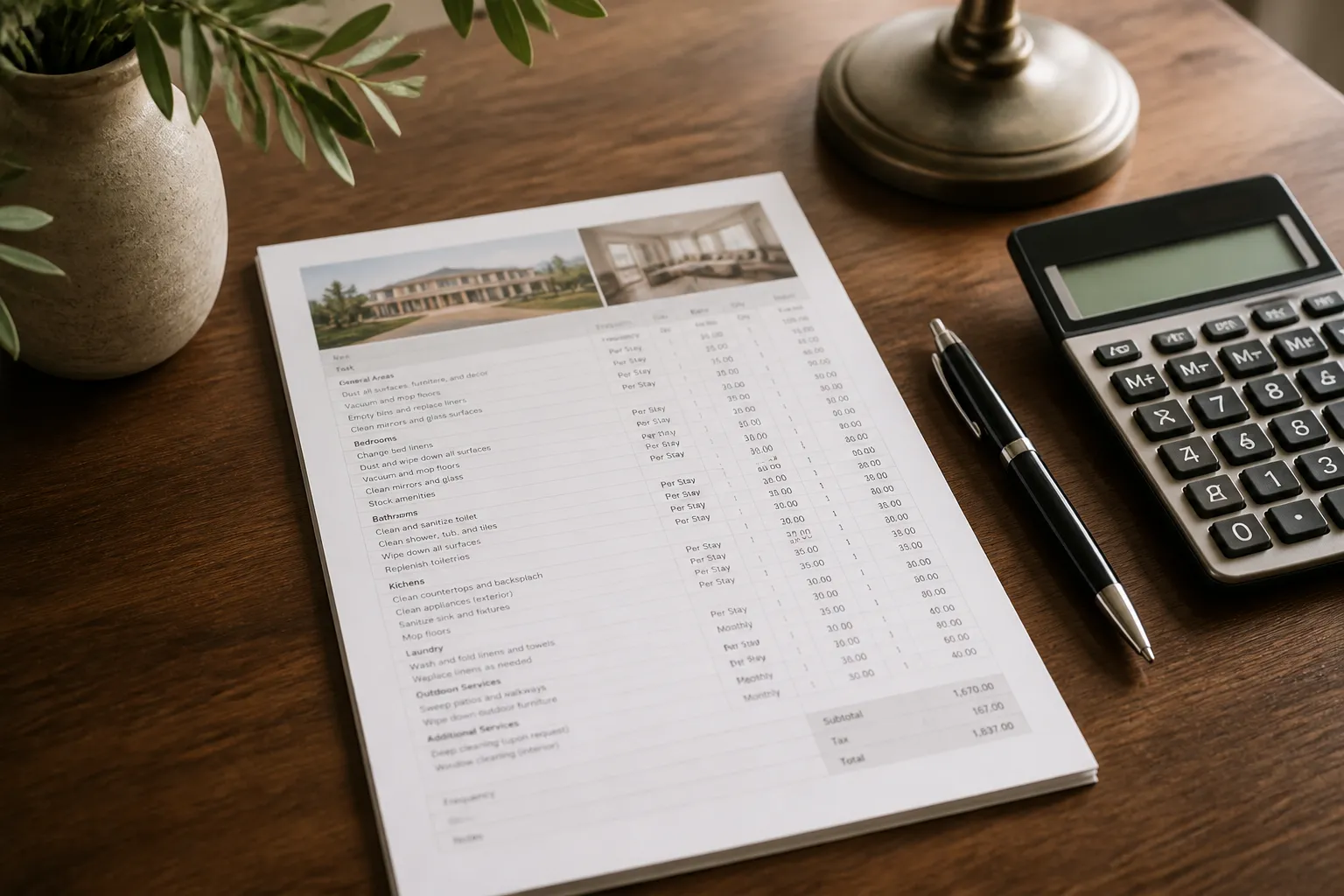
The cost per room is the figure most properties use to compare cleaning quotes, but without understanding what drives it, the comparison can be misleading and can lead to a choice based purely on the lowest number.
Contents
- Why comparing only the final price is a mistake
- What determines the cost per room
- How much it costs for a farm stay
- Comparing quotes properly
- Hidden costs not to forget
- When it makes sense to negotiate, and when it doesn’t
- The cost of a low price
- How the cost changes with the season
- A practical example of comparing quotes
- How to react to a price increase from your current supplier
- Judging the cost over time, not just the starting price
- How much time to spend analysing quotes
Why comparing only the final price is a mistake
Looking only at the final number on a quote, without breaking it down into its components, is probably the most common and most costly mistake a property can make at this stage. Two identical properties can receive quotes with an identical total but completely different substance, with one supplier including everything and another leaving out significant items to recover later as extras.
What determines the cost per room
The price per room depends on the average turnaround time, the property’s standard, the type of service (occupied or departure), the frequency in the contract and the geographic area. Two quotes with the same figure can hide very different service levels if these variables are not clearly specified, and it’s up to the property to ask for these details before signing, not discover them after the first month of service once the relationship is already under way.
How much it costs for a farm stay
The cost of a cleaning service for a farm stay follows a different logic from a hotel: pricing is often per unit (room or apartment) rather than per single clean, and the distance between buildings matters a lot when the farm stay is spread across several separate structures, since the team’s travel time between them has to be factored into the final price.
Comparing quotes properly
The isolated price says little. You also need to compare: what is included in the price (products, equipment, linen), the guaranteed service levels (quality control KPIs, response times for extra requests) and the terms for ending the contract. A quote broken down line by line is always more reliable than a single all-inclusive figure with no explanation.
Hidden costs not to forget
Beyond the stated price per room, there are costs that often stay out of the initial quote: extra work for stubborn stains or guest-caused damage, additional sanitisation requested outside the standard scope, any surcharges for evening or holiday hours. Asking upfront for a full price list of these extras avoids surprises on the monthly invoice.
When it makes sense to negotiate, and when it doesn’t
Negotiating the price makes sense when the property can offer something in return, such as stable volumes, a multi-year contract or favourable payment terms for the supplier. Negotiating a lower price without offering anything in return, on the other hand, almost always leads to a drop in service quality over time, because the supplier makes up the reduced margin elsewhere, typically in the time spent on each room.
The cost of a low price
A quote well below the average almost always corresponds to lower pay for staff, with direct consequences on turnover, training and service quality over time. It is not a saving: it is a risk deferred, one that typically shows up after the first few months of the contract.
How the cost changes with the season
The cost per room isn’t always the same throughout the year: during peak season, when room turnover is more frequent and the time available for each clean shrinks, some suppliers apply a slightly higher rate to offset the heavier workload. It’s worth clarifying at contract stage whether this seasonal variation exists and how it’s calculated, to avoid surprises on invoices during the busiest months.
A practical example of comparing quotes
Imagine two quotes for the same 40-room hotel: the first states €12 per room, the second €15. At first glance the first looks cheaper, but if it only covers basic cleaning without sanitising critical touchpoints, while the second includes it, the real comparison changes completely. It’s exactly in cases like this that a detailed specification makes the difference between a genuine saving and an apparent one.
How to react to a price increase from your current supplier
When an existing supplier announces a price increase, the instinctive first reaction is often to look for a cheaper alternative. Before doing so, it’s worth understanding what justifies the increase (labour costs, product costs, energy) and whether a new supplier, perhaps cheaper at first, will actually be able to hold that price over time or will raise it anyway after the first year, once the cost of switching again becomes less appealing for the property.
Judging the cost over time, not just the starting price
The real metric to watch is the cost per room cleaned to a consistent standard over time, not the price on the first quote. It is the criterion we follow when setting our offers for the cleaning service we provide to Tuscan properties.
How much time to spend analysing quotes
Properly comparing two or three quotes takes more time than a quick glance at the bottom line: budget at least half a day to read each specification line by line, check the exclusions in the small print and, where possible, call each supplier directly to clarify anything unclear. It’s a time investment that comfortably pays for itself by avoiding the wrong contract for a year or more.
A supplier willing to sit down calmly and explain every line item of their quote, without rushing to close the deal, already gives a useful signal about how transparently they’ll manage the relationship once the contract is signed.
Want a transparent quote for your property? Get in touch.