


Hotel hygiene obligations: what the rules require
Published on
5 min read
A hotel’s hygiene and safety obligations are not limited to the visible cleaning of rooms: they cover documentation, checks and procedures that need to stay active even when nobody is watching, and that only become obvious the moment an inspection arrives, or worse, an incident happens. Getting familiar with these obligations early, rather than reacting to them under pressure, saves time and money for properties of every size.
Contents
- The main obligations to know about
- Health authority inspections: what to expect
- Waste management
- Why documentation matters as much as the work itself
- Penalties for non-compliance
- A minimum checklist to avoid being caught unprepared
- Differences between small and large properties
- A supplier who knows the obligations is an advantage
The main obligations to know about
A hotel has to guarantee adequate hygiene conditions in every area accessible to guests and staff, keep up-to-date documentation on cleaning and sanitising procedures, and train staff on the hygiene and safety risks specific to their role. These obligations do not just cover rooms and common areas, but also less visible spaces such as linen stores, plant rooms and chemical product storage areas, which are often neglected precisely because they are out of guests’ sight.
For a 30-40 room property, this translates in practice into a written cleaning plan for every area, a sanitisation log updated daily, and a staff training calendar that is actually followed, not just filed away.
Health authority inspections: what to expect
Before getting into the detail of inspections, it is worth remembering that these checks are not an exception reserved for properties with a history of problems: they can arrive at any time, whether triggered by a simple guest complaint or a routine check scheduled by the local health authority, regardless of the property’s reputation.
Health authority inspections of hotel cleaning mainly check the hygiene conditions of the dining areas, correct waste management and the presence of the required HACCP documentation. A property with written protocols and up-to-date logs faces this kind of check without surprises. Inspectors typically ask to see the documentation first and only then carry out a physical walk-through, so having everything organised and easy to find noticeably reduces both the length and the stress of the visit.
Properties with in-house dining or a bar service face more frequent checks than those offering accommodation only, because of the additional risk tied to handling food. Even properties without a kitchen are not exempt, however: swimming pool water quality, communal bathroom hygiene and general pest control all fall within the scope of a routine visit.
Waste management
Regulations on hotel waste disposal require correct separation between the different categories (municipal waste, special waste, spent chemical products), with particular attention to non-reusable cleaning products and their containers, since mixing them with ordinary waste is one of the most common findings during a check. It is an obligation often underrated compared with visible cleaning, but subject to specific checks. Chemical product containers, for example, cannot go out with general unsorted waste and need to be handled according to local council rules or through a supplier authorised for special waste disposal.
Why documentation matters as much as the work itself
A cleaning job done correctly but not documented is worth less, in the event of an inspection, than a job documented precisely. Sanitisation logs, product data sheets and staff training plans are the proof that the service genuinely follows the required obligations. A useful working principle: if it is not written down somewhere, to an inspector it might as well never have happened, no matter how well the work was actually carried out.
Penalties for non-compliance
The consequences of a non-compliance finding range from a simple formal notice to fix the issue within a set deadline, to stricter financial penalties in cases of concrete hygiene risk to guests. In the most serious cases, tied for example to major failures in kitchen management or an unmanaged pest infestation, dining operations can be temporarily suspended until adequate conditions are restored. Preventing these scenarios with regular internal checks costs infinitely less than dealing with them after a failed inspection.
A minimum checklist to avoid being caught unprepared
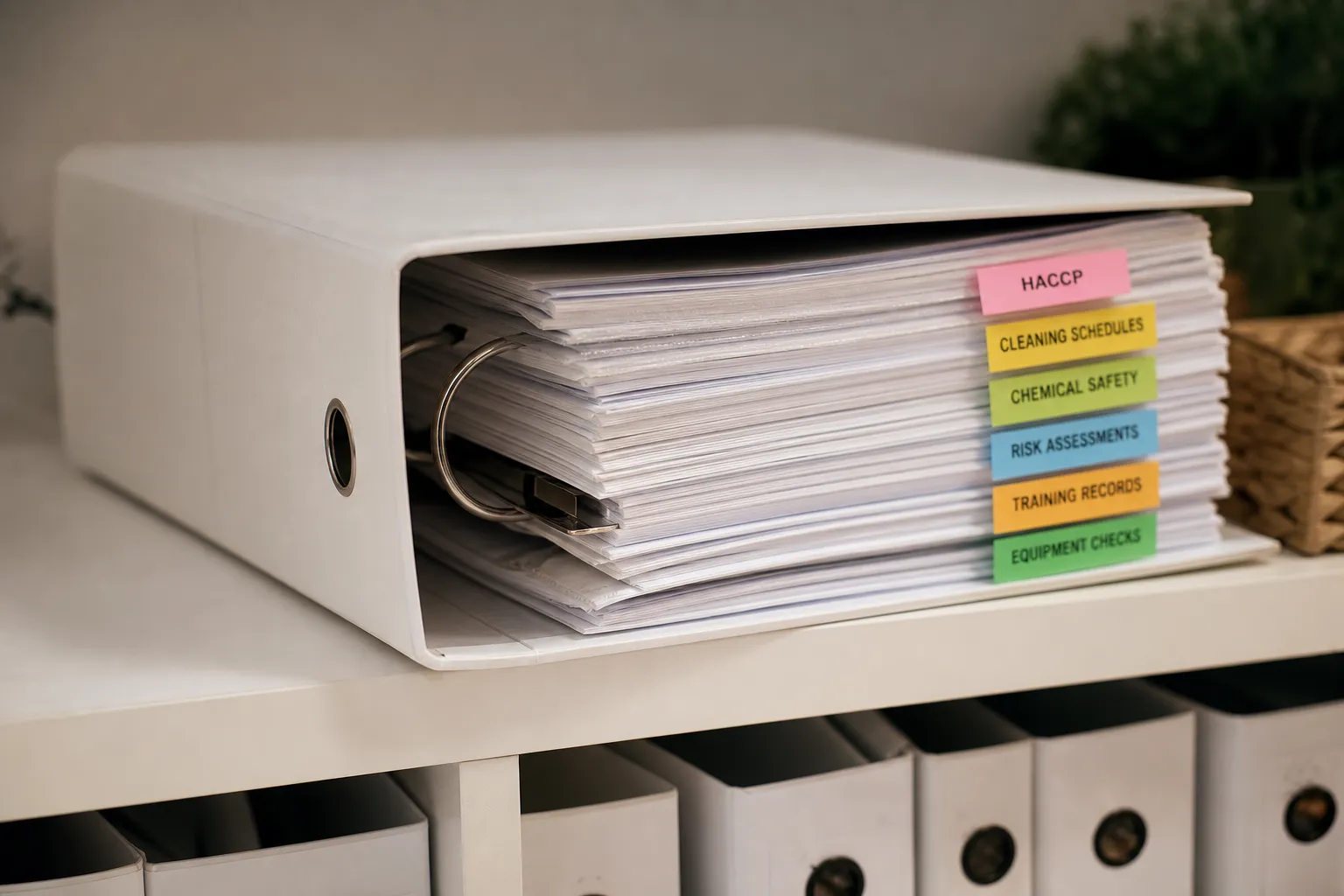
A property that wants to face a check calmly should always have on hand: the up-to-date HACCP self-monitoring plan, sanitisation logs from recent months, documentation on special waste disposal, staff training certificates and safety data sheets for the chemical products in use. Keeping them in a single binder, reviewable in a few minutes, is the difference between an inspection handled with confidence and one experienced with anxiety.
Differences between small and large properties
A family-run B&B with five rooms and a hotel with a hundred and twenty rooms and in-house dining answer to the same underlying obligations, but with a very different documentation load. In smaller properties, the owner often manages all the paperwork personally, with the risk that an unexpected event (an illness, a particularly busy period) leaves an update behind. In larger properties, on the other hand, responsibility needs to be clearly split across several roles (housekeeping, F&B, maintenance) with a single manager who checks that everything ties together.
In both cases, handing management of cleaning and sanitising documentation to a structured outside supplier reduces the risk of gaps, because the supplier already has established processes for keeping records, regardless of the client property’s size.
A supplier who knows the obligations is an advantage
Working with a cleaning supplier who understands these regulatory obligations reduces the administrative load on the property. It is the approach behind our cleaning service for hotels and hospitality businesses across Tuscany.
For a check of your hygiene and safety documentation, get in touch.