


Hotel hygiene protocols: how to build them properly
Published on
5 min read
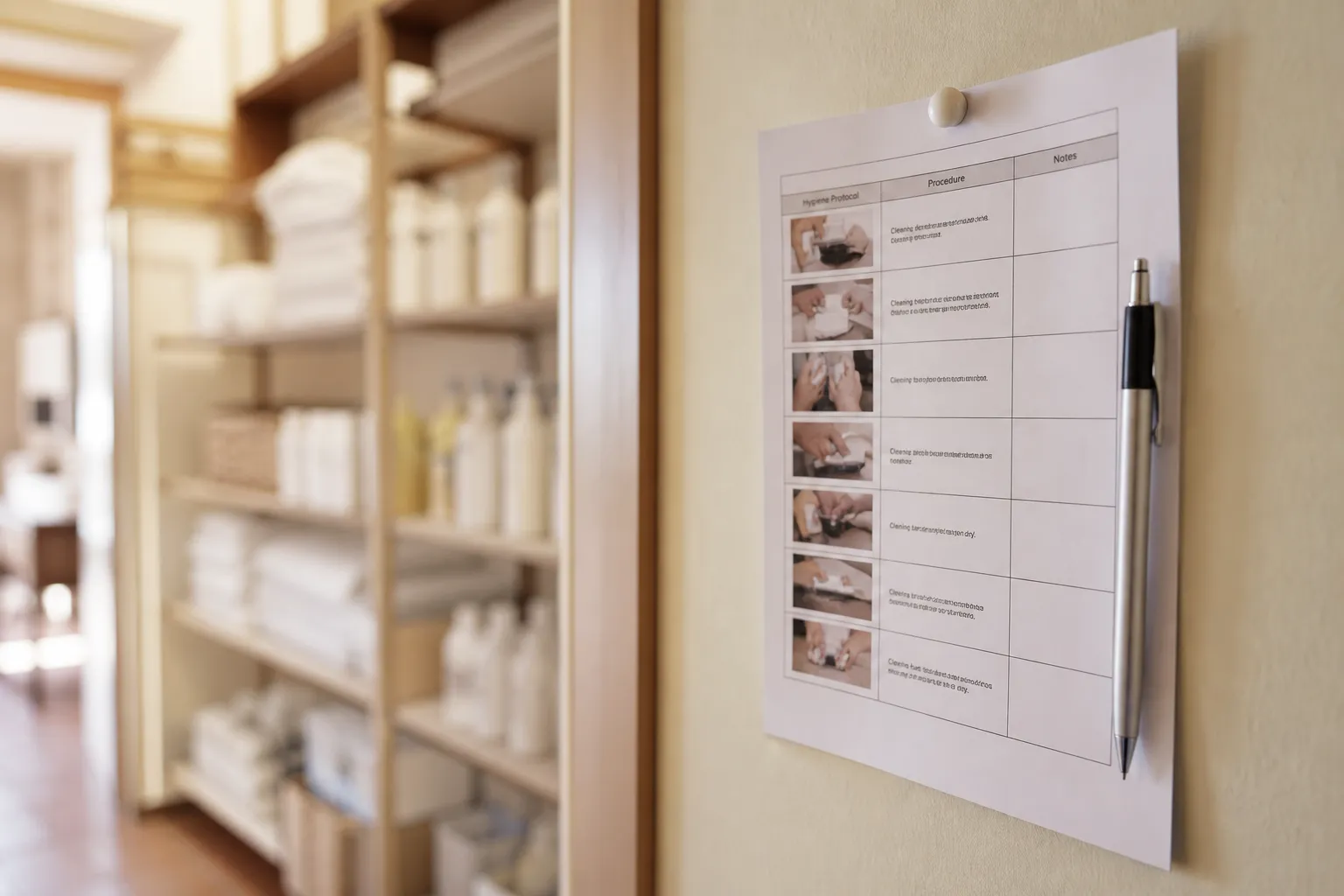
A hygiene protocol is not a document to keep in a drawer for a possible inspection: it is the operational tool that tells every team member what to do, when, and with which products, cutting down on decisions left to the moment.
Contents
- What a protocol needs to contain
- Enclosed spaces and air exchange
- Periodic surface checks
- Linen and laundry
- Training staff to use the protocol
- Adapting the protocol to small and large properties
- Linking the protocol to onboarding
- Communicating the protocol to guests, when it makes sense
- Updating the protocol over time
- The protocol’s role during an inspection
- Common mistakes when drafting a protocol
What a protocol needs to contain
A complete protocol states, for every area of the property, how often it needs attention, which products to use, the required contact time and who is responsible for checking it. Without these four elements, a protocol stays an intention, not a procedure. It’s worth adding a fifth, often forgotten element: what to do when something goes wrong, for example when a product runs out mid-shift or an area needs work that wasn’t planned for.
Enclosed spaces and air exchange
Sanitising enclosed hotel spaces (rooms, meeting rooms, offices) needs attention to air exchange too, not just surfaces. A space that has been sanitised but never aired out still builds up smells and humidity that undermine how clean it feels, undoing part of the work done on the surfaces. A complete protocol should also specify minimum airing times for each type of space.
Periodic surface checks
A microbiological check on hotel surfaces, even just a sample of critical areas (shared bathrooms, the kitchen, the breakfast room), lets you verify whether the protocol is actually working, not just whether it is being followed on paper. Many properties do this every six or twelve months, often relying on an outside lab that provides a report comparable over time.
Linen and laundry
Sanitising hotel linen depends largely on the wash cycle: temperature, time and the product used in the laundry matter more than any treatment applied afterwards, in the room. A complete hygiene protocol therefore also includes the standards required of the laundry supplier, whether in-house or outsourced, with minimum parameters written into the contract if the service is outsourced.
Training staff to use the protocol
A perfectly written protocol that is never explained to the team has little practical value. The most effective training isn’t having people read the document, but showing it applied on the ground, area by area, with shadowing during the first few weeks. Only once staff have seen the logic behind each step can they apply it in situations the document doesn’t explicitly cover.
Adapting the protocol to small and large properties
A protocol designed for a large hotel with several departments would be excessive for a small family-run B&B, and the reverse is also true: a protocol that’s too simple wouldn’t cover the complexity of a large property. The scale of the document should be calibrated to the number of areas, the number of people involved and the property’s actual risk level, not copied from a generic template found online.
Linking the protocol to onboarding
The best time to introduce a new team member to the hygiene protocol is their first day on the job, not after weeks of generic shadowing. A short, structured path (walking through the document, a practical demonstration in one or two sample areas, a check-in after the first few shifts) noticeably cuts the time it takes for a new hire to become independent and reduces mistakes during the first weeks, typically the highest-risk period.
Communicating the protocol to guests, when it makes sense
Some properties choose to transparently share part of their hygiene protocol with guests, for example through an in-room card or a dedicated section on their website. It isn’t necessary, or always advisable, but in market segments more sensitive to this topic (families with young children, guests with known allergies) it can be a factor that tips the choice in the property’s favour, as long as what’s communicated genuinely matches day-to-day practice.
Updating the protocol over time
A protocol written once and never reviewed loses its value: new products, new regulations, or simply the experience of the people working in the property every day should lead to a review at least once a year. It is the method we apply in the cleaning and sanitising service we offer to hospitality businesses.
The protocol’s role during an inspection
In the event of a check by a local health authority, having a written, up-to-date protocol with evidence of the checks carried out makes a real difference compared with having to reconstruct from memory what is normally done. An inspector assesses not just the hygiene condition at the moment of the visit, but also the property’s ability to demonstrate a systematic method applied over time, not just an extraordinary clean-up done in anticipation of the visit, something an experienced eye almost always recognises for exactly what it is, no matter how thoroughly the property scrubs in the days beforehand.
Common mistakes when drafting a protocol
The two most frequent mistakes pull in opposite directions: a protocol that’s too generic, copied from a template found online and never adapted to the real property, and a protocol that’s too detailed, which ends up being ignored because nobody has time to read it in full during a shift. The right balance is a document specific to your own property but concise enough to be checked in a few minutes.
A well-written protocol also becomes, over time, a training tool for new hires and a solid foundation for any quality or sustainability certification the property decides to pursue in the future.
Want help building or reviewing your property’s hygiene protocol? Get in touch.