


Hotel lobby cleaning: standards and frequency
Published on
5 min read
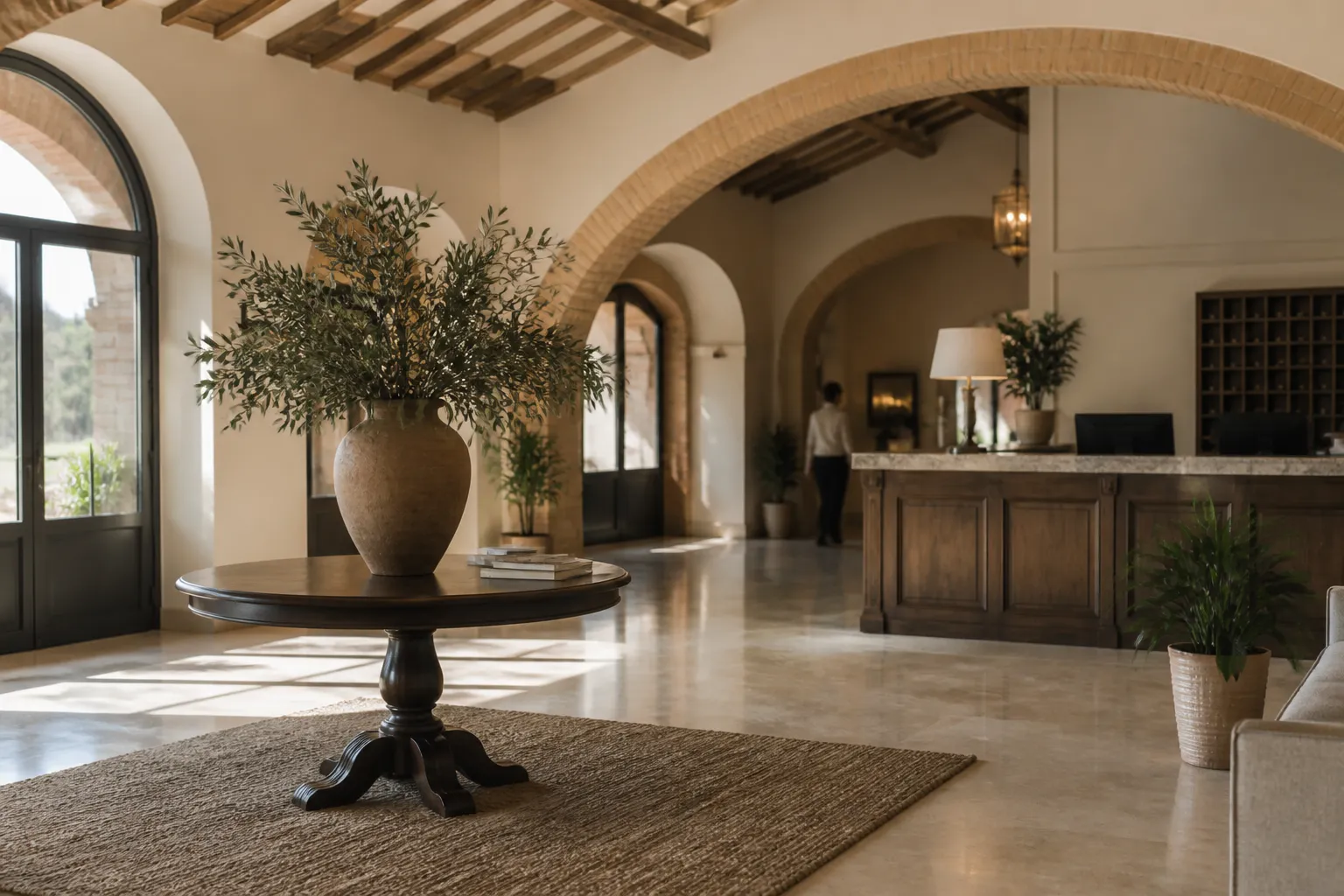
The lobby is the first space a guest sees on entering a hotel, and often the last thing they notice on the way out: a high standard of cleanliness there matters more than almost anywhere else, because it sets the impression every later judgement will be built on.
Contents
- The lobby’s critical areas
- How often to clean
- Glass and transparent surfaces
- Sofas, armchairs and lounge areas
- Smell and sensory comfort in the lobby
- Plants, decorations and seasonal displays
- What to measure to track standards over time
- Night cleaning: when it makes sense
- Training staff to work without disturbing guests
- Coordinating with maintenance work
- A space that speaks before anyone does
The lobby’s critical areas
Reception, the waiting area, entrance floors and glass surfaces: these are the four points that need constant attention throughout the day, not just one pass at the start of a shift. Cleaning the reception desk needs to be coordinated with front-desk staff, so it never gets in the way during the busiest moments: in practice that means wiping the counter when there’s no queue, and leaving anything that involves moving objects or documents for a quieter moment.
How often to clean
Unlike a room, which is cleaned once a day, a lobby needs recurring checks: floors and glass should be checked every 2-3 hours during peak times (check-in, check-out, breakfast), with a more thorough pass during quieter hours. On rainy days this frequency should increase noticeably: water tracked in on guests’ shoes makes polished floors slippery far faster than usual, and it is one of the most common causes of injury in hotel common areas.
Glass and transparent surfaces
Cleaning lobby glass deserves its own section because fingerprints and smudges are immediately visible under natural light. It should be cleaned with residue-free products in a dedicated pass, not folded into the general dusting round. Automatic glass doors in particular should be checked more often than other glass surfaces, since they take the most contact from hands and moving luggage.
Sofas, armchairs and lounge areas
Lobby relaxation areas (sofas, armchairs, low tables) deserve the same attention as touch points in a guest room: armrests and backs are touched constantly and should be dusted and sanitised several times a day, not just vacuumed weekly along with the upholstery. Cushions and removable covers should be on a scheduled wash cycle, not just cleaned when a stain is noticed.
Smell and sensory comfort in the lobby
Smell matters as much as sight in a first impression: a lobby that looks clean but smells of stale damp or overpowering products still signals a problem. Regular ventilation, checking for any leaks near entrances and glass, and a measured (never overpowering) use of scent diffusers complete the sensory standard a top-tier lobby should have.
Plants, decorations and seasonal displays
Real or artificial plants, flower arrangements and seasonal displays add character to a lobby, but they need their own maintenance: wilted or dusty leaves signal neglect just as much as a dirty floor does. Real plants should be checked daily for fallen leaves and soil spilled from pots, while artificial ones collect dust in a way that’s less obvious but just as real, and should be on a dedicated cleaning cycle every 2-3 weeks.
What to measure to track standards over time
Beyond the daily visual check, it’s worth tracking a few simple indicators: the number of complaints or reports linked to lobby cleanliness in a month, the average response time to a reported spill, and the outcome of the supervisor’s spot checks. Even collected simply on a shared spreadsheet, this data makes it possible to spot a drop in standards early, before it turns into a negative review.
Night cleaning: when it makes sense
Many properties leave the more invasive jobs (deep floor washing, cleaning carpets and sofas) to night cleaning of common areas, when footfall is at its lowest and there is no disruption for guests. It is also the right time for jobs with long drying times, such as polishing stone or marble floors.
Training staff to work without disturbing guests
Cleaning a busy lobby calls for a different kind of training than cleaning an empty room: staff need to judge when a job can wait a few minutes and when it needs doing immediately, such as a spill that creates a slip risk. The simplest practical rule is: safety always, appearance whenever it doesn’t get in guests’ way.
Coordinating with maintenance work
Routine or one-off maintenance work in the lobby (painting, replacing a fixture, repairing a piece of furniture) should always be coordinated with the cleaning team, not managed separately. Construction dust, offcuts and tools left in view send a message of disorder far more damaging than a floor that’s slightly less shiny than usual. Clearly marking off the work area and scheduling a thorough clean immediately after each job stops the disruption from dragging on longer than it needs to.
A space that speaks before anyone does
Before a guest even speaks to reception, the lobby has already said something about the property. That is why we bring the same attention to common areas in our cleaning service as we do to guest rooms.
Even a compact lobby, typical of many family-run B&Bs and hotels across Tuscany, deserves the same level of attention: a smaller footprint doesn’t mean a lower standard, it simply means each pass takes less time.
A consistently well-kept lobby also feeds back into staff morale: a team that sees its work maintained and respected tends to hold the standard for longer than one that watches a freshly cleaned space get messy again within the hour.
Want to review your lobby’s cleaning standards? Get in touch for a free site visit.