


Hotel spa cleaning: protocols and frequency
Published on
5 min read
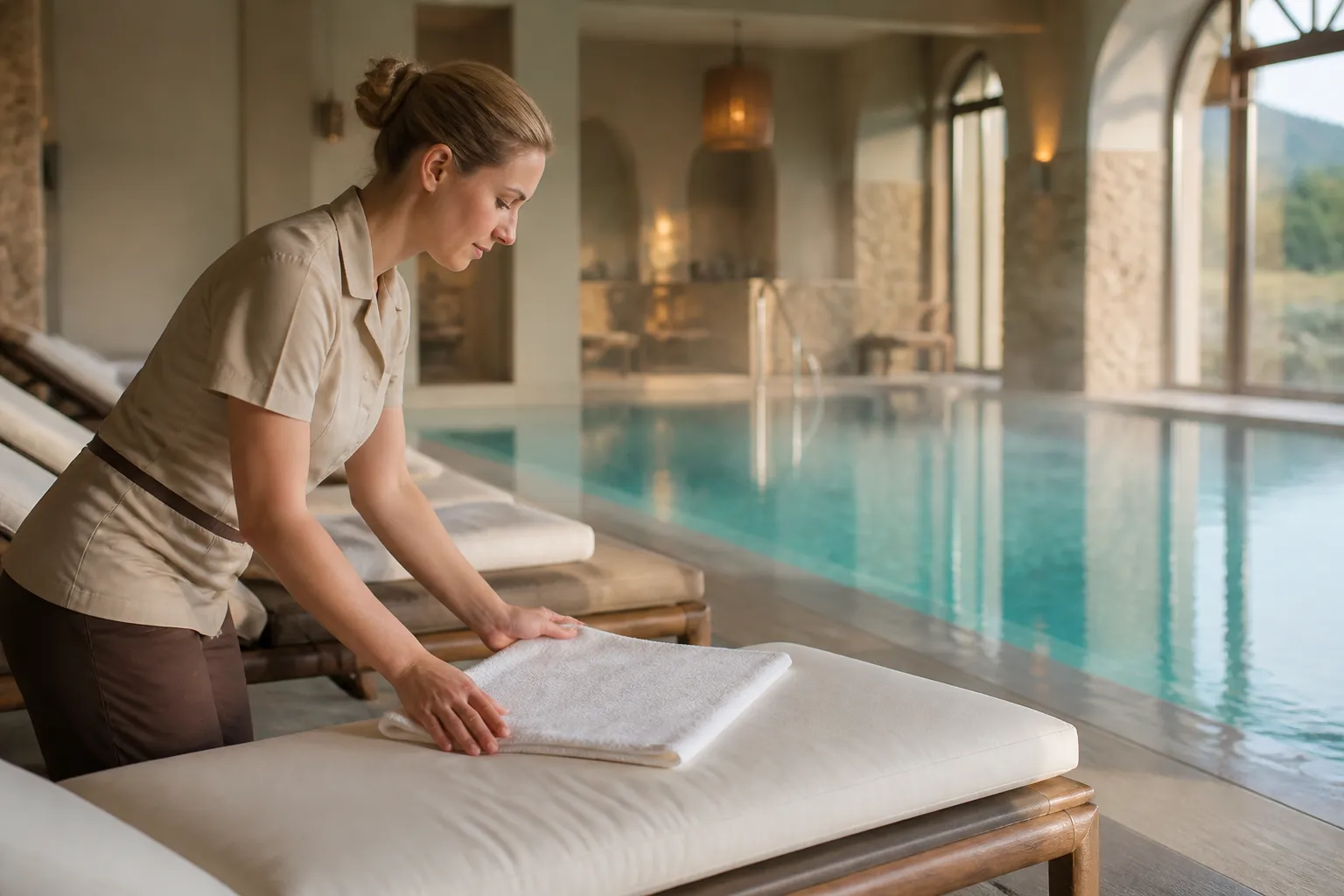
The wellness area is, alongside the bathroom in a guest room, the space with the strictest hygiene requirements in the whole hotel: humidity, surfaces in direct contact with skin and shared use make every cleaning mistake more visible and more risky than almost anywhere else on the property.
Contents
- The highest-risk zones
- Indoor pool: chemical parameters and checks
- Changing rooms: continuous checks
- The gym: focus on the equipment
- Dedicated products and equipment for the wellness area
- Air exchange and humidity control
- Documentation and legal liability
- Terraces and outdoor spa areas
- Training staff for a high-risk environment
- Closing windows for thorough maintenance
- Small spas and wellness corners at farm stays
- A protocol that protects the guest and the property
The highest-risk zones
Showers, saunas, steam rooms and the pool edge are the areas where microbiological risk is most concentrated, because of constant heat and humidity. They need a sanitising protocol more frequent than the rest of the property, often several times a day during peak use, with particular attention to tile grout, where mould and bacteria settle in most easily.
Indoor pool: chemical parameters and checks
If the wellness area includes an indoor pool, visibly clean surfaces are not enough: water chemistry (free chlorine, pH, temperature) needs to be checked and logged regularly according to current regulations. A daily updated log is not only for guest safety; it is also often required in the event of an inspection by local health authorities.
Changing rooms: continuous checks
Cleaning a hotel’s changing rooms should be organised around recurring checks throughout opening hours, not a single daily pass: dry floors, lockers free of abandoned items, benches and seating sanitised on every round. Mirrors, often overlooked in humid environments, should be checked at the same frequency as the sanitary fittings, since fogging and streaks build up quickly.
The gym: focus on the equipment
In a hotel gym the critical point is not the floor but the surfaces in contact with skin: dumbbells, mats, exercise bike saddles. They need sanitising after every visible use, with a product dispenser available for guests to use themselves between staff rounds. Towels supplied in the gym should also be on a faster replacement cycle than room towels, given the intensity of use packed into just a few hours a day.
Dedicated products and equipment for the wellness area
The constant humidity of the wellness area calls for specific, mould- and limescale-resistant products, different from those used elsewhere in the property. Cloths, buckets and equipment should be dedicated exclusively to this area and never shared with other parts of the hotel, to avoid carrying residual moisture or contamination into different environments.
Air exchange and humidity control
A wellness area that looks well cleaned but has poor ventilation will still develop mould and bad smells over time. Periodic checks on dehumidification and air exchange systems should be built into the cleaning protocol, not left solely to technical maintenance: an overly humid environment undoes even the most careful sanitising work, because it creates ideal conditions for bacteria and fungi to regrow during the hours the area is closed to guests.
Documentation and legal liability
Keeping a written log of sanitising work and water parameter checks isn’t just good practice: in many jurisdictions it’s a regulatory requirement for pools used by the public, and in the event of a health authority inspection it’s the evidence that the property has met the required standards. An incomplete or missing log exposes the property to penalties regardless of how good the actual cleaning was.
Terraces and outdoor spa areas
When the wellness area extends onto a terrace (a solarium, outdoor tubs, open-air relaxation zones) cleaning a hotel terrace needs extra attention for pollen, leaves and airborne residue, which build up faster than indoors. Loungers and umbrellas should be included in the sanitising rotation at the same frequency as indoor skin-contact surfaces.
Training staff for a high-risk environment
Staff working in the wellness area should get training specific to that setting, different from the rest of the property: recognising signs of possible contamination, knowing how to handle a chemical spill, understanding the correct contact time for disinfectants in a high-humidity environment. It is an investment that significantly cuts the risk of hygiene incidents, along with the related legal liability for the property.
Closing windows for thorough maintenance
Many wellness areas schedule a daily closure window, even a short one, dedicated solely to thorough maintenance: fully draining and cleaning the pool, checking filters, sanitising saunas and steam rooms without guests present. Communicating this window clearly, even with a simple sign, avoids misunderstandings with guests and gives the team the time they need without having to rush to avoid disrupting use.
Small spas and wellness corners at farm stays
Even smaller properties, such as Tuscan farm stays that have added a small wellness area to stand out in the market, need to follow the same basic principles, scaled down: fewer square metres doesn’t mean less risk, especially if the hot tub or sauna is shared by different guests on the same day with no sanitising interval between uses.
A protocol that protects the guest and the property
A wellness area kept visibly and verifiably clean is also legal protection for the property, as well as a factor guests use to choose it. It is the standard behind the cleaning service we provide for hotel spas across Tuscany.
A well-run wellness area also benefits from a single point of accountability, someone who checks logs, water parameters and the cleaning rota together rather than treating each as a separate task handled by different people at different times, with nobody responsible for the full picture and nobody noticing when something slips between the cracks.
Want to review your wellness area’s cleaning protocols? Get in touch for a free assessment.