


How often to clean hotel common areas
Published on
5 min read
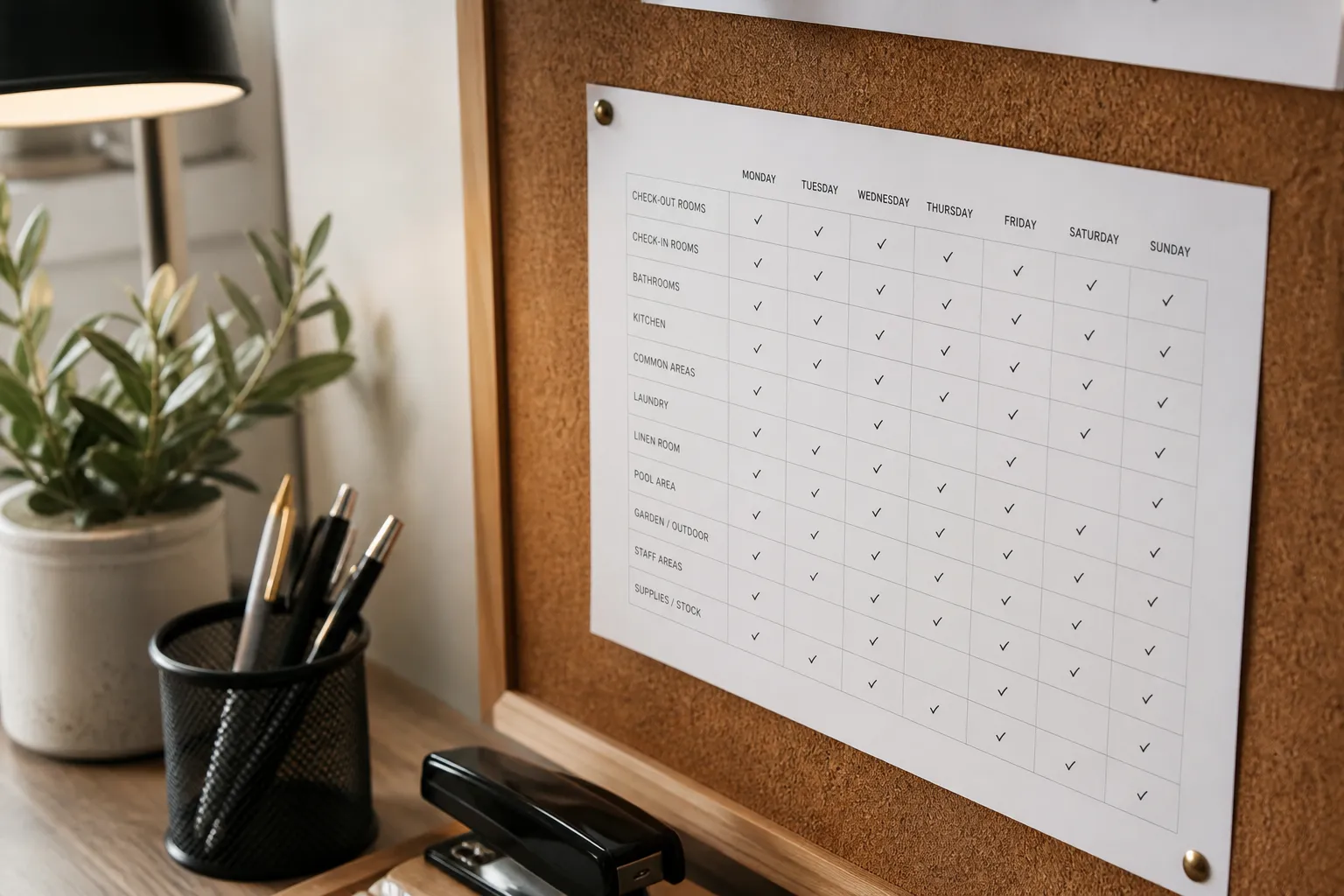
Not every common area in a hotel needs the same cleaning frequency. Treating them all the same way almost always means over-investing in some zones and neglecting others, with a direct impact both on service costs and on how much care guests feel the property puts in.
Contents
- The highest-frequency areas
- Areas used intermittently
- Seasonal outdoor areas
- Low-visibility transit areas
- Differences between large hotels and smaller properties
- Adjusting frequencies for peak and low season
- Tools for monitoring whether the plan is followed
- Assigning responsibility for each area
- Reviewing the plan after a change to the property
- Building a realistic cleaning schedule
The highest-frequency areas
The lobby, reception and breakfast room need checks every 2-3 hours during opening hours, for the reasons already covered: they are the most visible spaces with the highest footfall of the day. Public restrooms available to guests fall into this category too and deserve equally close attention, with a visible check log that reassures guests about how often they are actually serviced.
Areas used intermittently
A hotel meeting room should be cleaned around bookings, not on a fixed calendar: a check before and after each event, plus a maintenance pass if use continues over several consecutive days. The same applies to event spaces and multi-purpose function rooms, where the type of event (a working breakfast versus a gala dinner) also determines the level of clean-up needed immediately afterwards.
Seasonal outdoor areas
Cleaning a hotel pool area and the garden follows a different rhythm depending on the season: daily during peak months, more spread out during partial-opening periods. Leaves, pollen and airborne residue call for more frequent checks at seasonal changeovers, particularly in autumn and early spring, when leaf fall and flowering overlap with peak use of outdoor areas.
Low-visibility transit areas
A hotel’s luggage storage room is often forgotten in cleaning plans because guests spend little time there, but it still needs regular cleaning: it is a transit point for suitcases arriving from very different environments, and a dusty room here still gets noticed when guests collect their bags. Service corridors and secondary stairwells, invisible to guests but used by staff several times a day, also deserve a defined minimum frequency rather than being left to individual initiative.
Differences between large hotels and smaller properties
A large hotel with dozens of distinct common areas needs a formalised, written cleaning schedule simply because no single person can keep it all in their head. In a B&B or a small farm stay, where there are few common areas and staff know them well, a simpler, verbal plan can work just as well, as long as it’s still followed consistently and not left to daily improvisation.
Adjusting frequencies for peak and low season
A cleaning schedule shouldn’t stay fixed all year round. During peak season, with full occupancy and common areas always busy, many frequencies need to double compared with low season, when the property can afford more spread-out checks without losing perceived quality. The most common mistake is keeping the same schedule year-round: either staff get wasted during low season, or the property is left exposed during peak traffic periods.
Tools for monitoring whether the plan is followed
A cleaning schedule written on paper is worth little if nobody checks it is actually followed. A checklist signed off at every pass, even just with initials and a time, or a management app that logs the job automatically, makes it possible to check at the end of the week whether the planned frequencies were actually met, and to act quickly if a systematic gap shows up in a particular area or time slot.
Assigning responsibility for each area
A cleaning schedule only works if it’s clear who is responsible for each area during each time slot. In larger properties it’s worth assigning fixed zones to fixed teams, so knowledge of each area’s details (where dirt builds up most, which spots need extra attention) grows over time instead of getting lost by constantly rotating staff between different zones.
Reviewing the plan after a change to the property
A cleaning schedule shouldn’t be written once and forgotten: it needs revisiting whenever something structural changes, such as a new common area opening, an increase in room capacity, or a change to a service’s opening hours. Many properties keep applying a plan designed for an earlier layout, which results in under-cleaning new areas or over-investing in ones that have changed in importance.
Building a realistic cleaning schedule
The most effective way to plan frequency is to classify every area against two variables: how much footfall it gets and how visible it is to guests. High-traffic, high-visibility areas need cleaning more often; low-traffic but high-visibility areas (like an empty meeting room guests still walk past) still need regular checks even when unused.
It’s also worth reviewing the plan based on guest feedback gathered from online reviews: if several independent reviews flag the same area as poorly kept, that’s a more reliable signal than any internal check that the frequency assigned to that zone needs revisiting.
Even a simple plan, written on a single sheet and shared with the whole team, is already a big improvement over having no plan at all: the main difference isn’t between a sophisticated system and a simple one, but between having something written down and relying only on memory and individual habits.
A schedule that’s realistic about frequency also makes it easier to onboard new staff, since a written plan gives them something concrete to follow from day one instead of having to absorb unwritten habits from more experienced colleagues over several weeks.
A well-built cleaning schedule is the basis of our common areas cleaning service for hotels and hospitality businesses across Tuscany. For a frequency map of your property, get in touch.