


How to organise hotel housekeeping shifts
Published on
5 min read
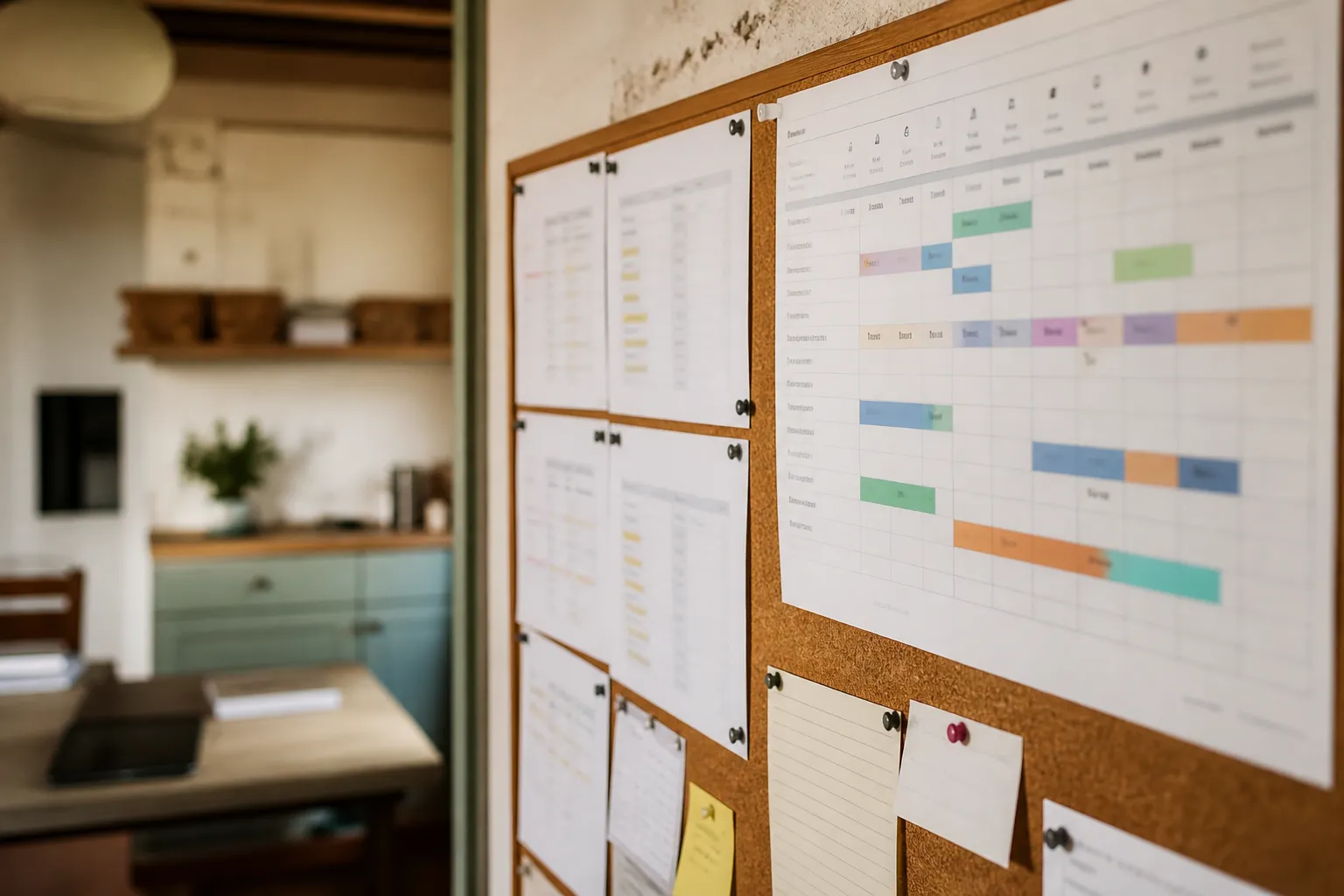
A well-organised housekeeping shift does not just depend on the number of people available: it depends on how rooms, priorities and unexpected events are distributed throughout the day, and how much margin the plan leaves for handling what cannot be predicted. Getting this wrong shows up quickly, in rooms not ready on time and staff visibly rushing past guests in the corridors.
Contents
- The criteria for assigning rooms
- Managing housekeeping shifts over time
- Handling the unexpected during a shift
- The role of management software
- How many rooms to assign per person
- Communicating schedule changes to the team
- Shifts and breaks: a balance not to overlook
- Planning shifts during the low season
- Coordinating shifts with reception and maintenance
- Organising shifts means organising the guest experience
The criteria for assigning rooms
Rooms should be assigned considering the type of service (occupied or departure), physical location on the floor plan (to minimise movement), the check-in time required for priority departures, and the experience level of the person assigned. Random assignment almost always leads to workload imbalances between teams, with someone finishing well ahead of time and someone else falling behind for reasons unrelated to their actual work capacity.
Managing housekeeping shifts over time
Shift management needs to account not just for the daily workload but also for holidays, sick leave and weekly peaks (weekends are often busier for check-in and check-out). A weekly plan, not just a daily one, cuts down on last-minute surprises. Planning at least a week ahead, while still leaving room for adjustments, also lets staff better organise their personal lives, a factor that directly affects job satisfaction and turnover.
Handling the unexpected during a shift
Last-minute requests, rooms that run over the expected time, sudden absences, a guest asking to extend their stay by a night: a well-organised shift builds in some flexibility, rather than a rigid plan running at 100% of available capacity. Planning at the absolute limit of capacity means having no margin for anything unexpected. Good practice is keeping one “floater” person on shift with flexible support duties, who can be quickly redeployed wherever needed without having to reorganise the entire day’s plan.
The role of management software
Hotel housekeeping management software centralises room assignment, the real-time status of every job and communication with reception, cutting down time lost to verbal or paper-based communication between departments. It is not essential for small properties, but becomes useful past a certain number of rooms, roughly once a single whiteboard or shared spreadsheet starts becoming hard to keep updated in real time throughout a busy day. Beyond speed, the main advantage is traceability: knowing exactly when a room was marked ready lets you respond to reception’s requests in real time without having to physically call the floor.
How many rooms to assign per person
The number of assignable rooms varies by property type and type of service: an occupied room takes less time than a departure, and a 4-5 star property with higher standards needs more time per room than a simpler one. A common mistake is applying the same standard number of rooms per person all year round, without accounting for the fact that during peak season, with more frequent turnover, the actual workload per room increases even at the same assigned number.
Communicating schedule changes to the team
When the day’s plan changes (a room added at the last minute, a swap between two team members, an early check-in request from a returning guest) the communication needs to arrive clearly and verifiably, not just verbally and in a rush in the corridor. A shared digital channel, even something as simple as a messaging group dedicated to the day’s shift, reduces misunderstandings compared with relying only on word of mouth between colleagues.
Shifts and breaks: a balance not to overlook
A shift with no proper breaks, even short ones, during an intensive day of turnarounds tends to produce more mistakes in the last rooms handled, simply from fatigue and dwindling attention. Scheduling a short mid-shift break, on top of the meal break, is not a luxury but an investment in consistent quality throughout the day, especially on the hottest days of the Tuscan summer season.
Planning shifts during the low season
During the low season, with reduced occupancy, the challenge changes shape: it is no longer about managing a heavy workload, but about keeping the team motivated and organised with fewer rooms to distribute. Some properties use this period to rotate staff onto tasks other than standard turnarounds (extraordinary maintenance cleaning, training, reviewing standards), avoiding shifts with too light a workload that risk breeding disengagement.
Coordinating shifts with reception and maintenance
A housekeeping shift does not operate in isolation: reception needs a realistic idea of when rooms will be ready to manage early check-ins, and maintenance needs to know which rooms are currently occupied by cleaning staff to schedule repairs without causing conflicts. A quick daily briefing between the housekeeping supervisor and the other departments, even five minutes at the start of the shift, prevents most of the friction that otherwise surfaces later as guest-facing delays.
Organising shifts means organising the guest experience
A well-planned shift translates directly into rooms ready on time, less stress for staff and fewer complaints related to delays. It is the level of organisation we apply in our cleaning service for Tuscan hospitality businesses.
Want advice on organising shifts at your property? Get in touch.