


Marble floor maintenance in hotels: how to do it
Published on
5 min read
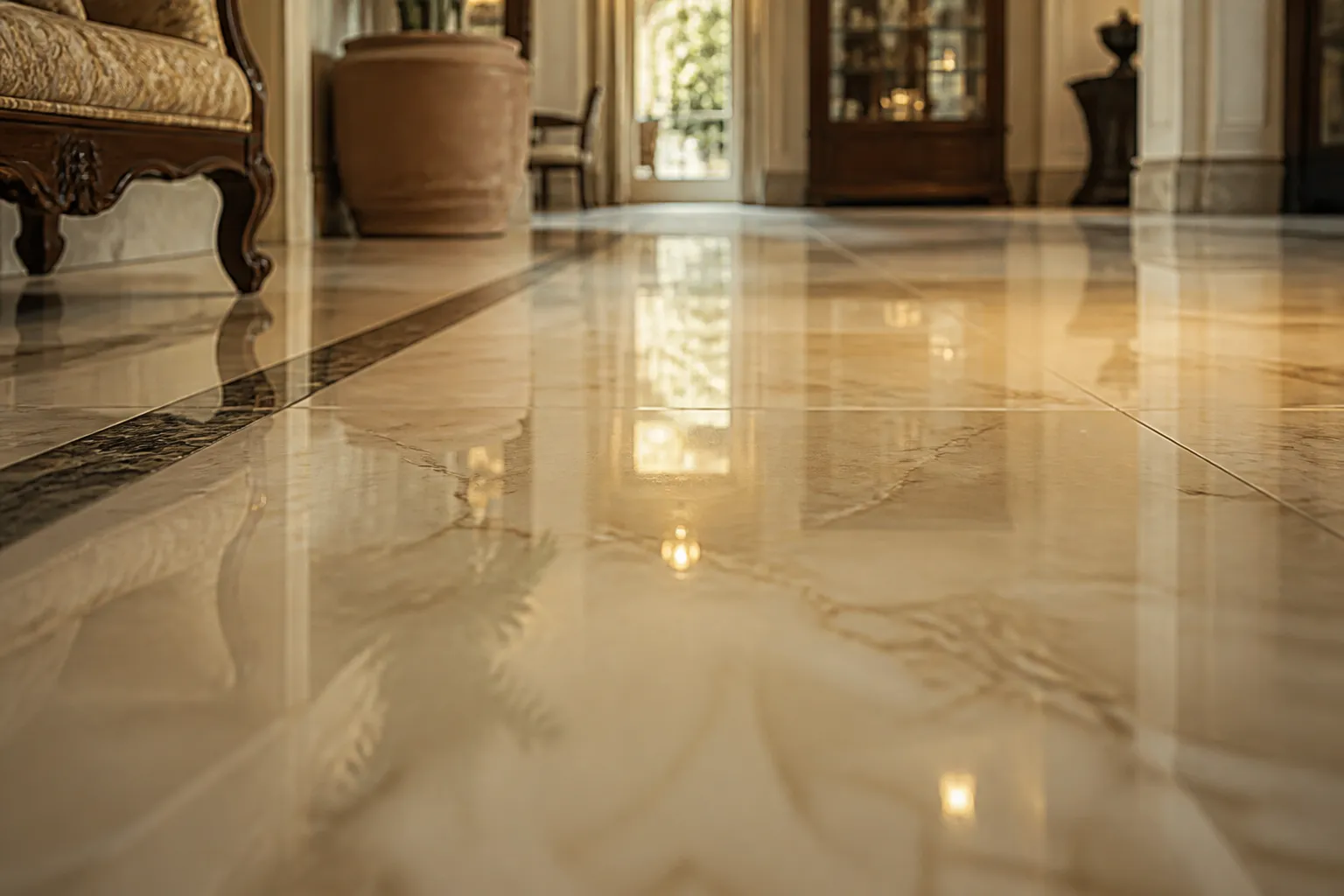
Marble is one of the most common materials in the lobbies and corridors of upscale hotels, but it is also one of the most delicate: the wrong product or a poor cleaning routine can dull it or leave permanent marks.
Contents
- Why marble needs different treatment
- The right products and frequency
- Mistakes that damage marble permanently
- Stairs, corridors and lifts: the same rules
- Other high-value floors: terracotta, resin and parquet
- How to spot marble floor damage early
- Preventive maintenance versus restoration work
- Outdoor areas and the car park
- Planning professional polishing
- Training the team on the property’s specific materials
- An investment that pays off over years
Why marble needs different treatment
Marble is a calcareous stone, sensitive to the acids found in many general-purpose cleaners. A product designed for other surfaces (even one labelled “all-purpose”) can corrode the surface over time, dulling the original polish. Even seemingly harmless products like vinegar or lemon juice, used to improvise a quick clean, are among the most common causes of permanent dull spots on this type of floor.
The right products and frequency
A neutral cleaner made specifically for natural stone should be used, with a microfibre cloth and no standing water left on the surface. Daily cleaning removes dirt and dust; a periodic professional polish (every 6-12 months depending on footfall) keeps the original shine. Between professional treatments, a solid routine maintenance programme noticeably slows down how quickly the floor loses its shine.
Mistakes that damage marble permanently
The most costly mistakes are almost always the same ones: using acidic or over-concentrated cleaners, dry-sweeping with stiff brooms that scratch the surface instead of soft cloths or mops, letting sand and debris get dragged across the floor without an entrance mat to catch it. Even metal-wheeled buckets or carelessly pushed trolleys can leave marks that are hard to remove without a full resurfacing job.
Stairs, corridors and lifts: the same rules
Cleaning hotel stairs and corridors follows the same logic as the lobby’s marble where the materials match, with an extra check on stair edges, the point of heaviest wear. Cleaning lifts calls for similar care on floors and walls, with more frequent attention to mirrors and buttons, which pick up fingerprints far faster than the floors themselves.
Other high-value floors: terracotta, resin and parquet
Many Tuscan properties, especially farm stays and hotels converted from historic buildings, combine marble with terracotta, resin or parquet in different areas. Each of these materials has its own rules: terracotta needs products that don’t affect its porosity, resin is sensitive to harsh solvents, parquet needs almost no standing water at all. Using the same protocol as for marble on these surfaces is a mistake that is as common as it is costly.
How to spot marble floor damage early
The first signs of poorly treated marble are often subtle: dull patches that don’t clear with routine cleaning, small abrasions only visible under raking light, areas that lose their shine unevenly compared with the rest of the surface. Catching these signs early allows for a localised repair, far cheaper than a full resurfacing job carried out once the damage has already spread across the whole area.
Preventive maintenance versus restoration work
The financial comparison almost always favours prevention: a programme of routine maintenance and periodic polishing costs a fraction of a full restoration job, which needs specialist machinery, days of partial closure for the area and a specialist technician. Properties that put off maintenance to save money in the short term almost always end up spending more once the damage becomes obvious to guests.
Outdoor areas and the car park
Even where a hotel car park has no marble, it is the first point of physical contact with the property for many guests arriving by car: sand, leaves and debris carried in through the main entrance are often the most common cause of scratches on fine floors near the door. An adequately sized entrance mat, often underrated, cuts a significant part of this problem on its own.
Planning professional polishing
Professional polishing shouldn’t only be scheduled once a floor looks visibly dull, but on a fixed calendar based on the property’s real footfall: a hotel with high occupancy all year round will need more frequent treatments than a strongly seasonal property, where the low season is also the best time to schedule the more invasive maintenance work without disrupting guests.
Training the team on the property’s specific materials
Every property has a unique mix of flooring, often the result of successive renovations over the years. Generic training on “how to clean marble” isn’t enough if the team doesn’t know exactly which floors in their own property are real marble and which are similar-looking but different materials, such as marble-effect porcelain stoneware, which tolerates far harsher products without being damaged. A written map of materials for each area, shared with the whole team, prevents most product mistakes.
An investment that pays off over years
A correctly treated marble floor lasts decades; a poorly treated one loses its shine within a few years and needs costly resurfacing. It is one of the details our teams are trained on as part of the common areas cleaning service for Tuscan properties.
Many Tuscan properties converted from historic buildings have original marble floors decades old, often more delicate than modern ones: in these cases it’s worth getting advice from a specialist technician before introducing any new product into the routine maintenance cycle.
A well-maintained floor also says something indirectly about how the rest of the property is run: guests who notice a dull, scratched floor tend to look more critically at everything else too, from the bathroom grout to the state of the furniture and fittings throughout the building.
Want an assessment of your property’s floors? Get in touch.