


What guests notice about cleanliness in a hotel room
Published on
4 min read
Not every cleaning detail carries the same weight in a guest’s assessment: some go completely unnoticed, while others, seemingly minor, become the criterion by which they judge the entire room. Understanding this hierarchy of attention is what separates a quality check that genuinely protects the guest experience from one that simply ticks boxes.
Contents
- Guests notice what they touch, not just what they see
- Details that make the difference in a hotel
- Cleaning checkpoints most visible to guests
- What almost always goes unnoticed
- Differences between guest types
- The role of light in perceiving details
- Collecting direct feedback from guests
- Training staff to see the room through a guest’s eyes
- Setting checks based on what actually matters to guests
Guests notice what they touch, not just what they see
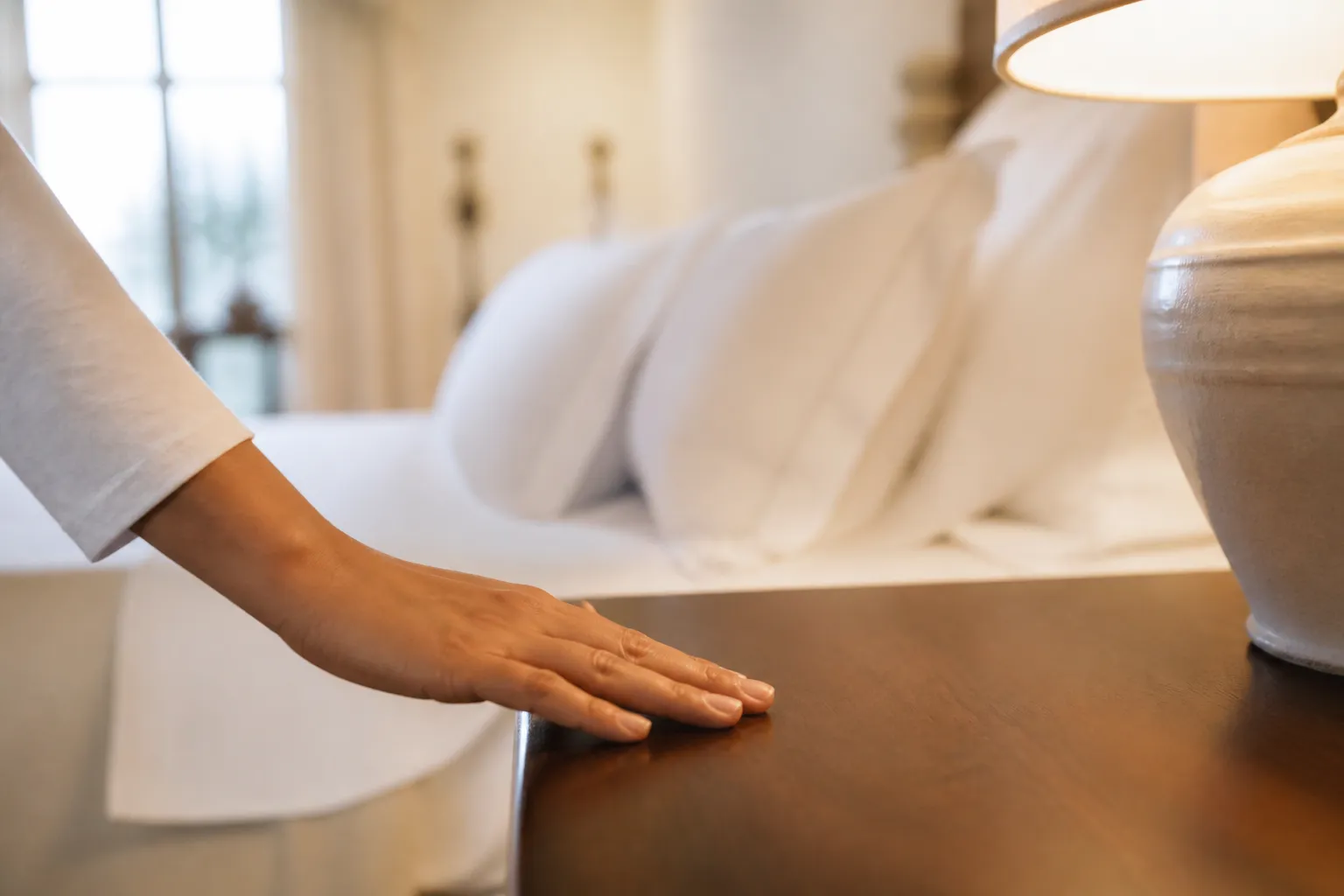
Surfaces that involve direct contact (the remote control, handles, switches, glasses) are judged more critically than surfaces guests merely look at, because physical contact triggers a more immediate, visceral judgement about cleanliness. A sticky or dusty remote control, for example, provokes an instinctive rejection out of proportion to its actual hygienic relevance, simply because it gets touched within the first few minutes of entering the room.
Details that make the difference in a hotel
A hair on the pillow, a stain on a glass, a mirror corner left unclean: these are tiny details in terms of surface area, but huge in terms of impact on overall perception, because the guest reads them as signs of a rushed cleaning job. These details act as “evidence” guests latch onto to justify a negative judgement they may have already formed for other reasons, sometimes unrelated to cleanliness itself.
Cleaning checkpoints most visible to guests
The points a quality check should prioritise above all are the ones most visible to guests in the first few minutes: bathroom, bed linen, surfaces with direct contact. A mistake on these points weighs more than ten correct details in less-observed areas. A checklist that weights these points more heavily, rather than treating every item the same, reflects the guest’s actual experience far better.
What almost always goes unnoticed
Areas like the back of furniture, the top of wardrobes or hard-to-reach corners are rarely noticed by an average guest, even though they are part of internal cleaning standards. That does not mean they should be ignored, but they are not the first ground on which a perception of cleanliness is built: they should be maintained out of respect for the overall hygiene standard, not because they directly affect the guest’s review.
Differences between guest types
A business guest staying a single night has a much shorter observation window than a family on holiday for a week, and tends to focus on a handful of key points (desk, bathroom, wifi) rather than a full assessment of the room. Knowing your property’s dominant guest profile helps calibrate where to focus extra attention during pre-check-in checks.
The role of light in perceiving details
The same room, cleaned to the same standard, can look more or less well kept depending on lighting: direct natural light reveals imperfections that soft artificial light hides, especially dust and smudges on glossy surfaces. Quality checks should therefore be done, where possible, with the curtains open and natural light in the room, not only under the room’s artificial lighting.
Collecting direct feedback from guests
Beyond public reviews, a short internal questionnaire handed out at check-out or emailed after the stay, with a specific question about perceived cleanliness and space for open comments, gathers more detailed and less filtered information than a public review, where guests tend to be more concise. This internal channel also catches small issues a guest wouldn’t consider serious enough to mention online, but which are still useful for improving the protocol.
Training staff to see the room through a guest’s eyes
Staff who clean the same rooms every day develop a kind of blindness to their own environment, missing details a first-time visitor would spot immediately. Encouraging staff to pause at the doorway before leaving a finished room and look at it as if they were the arriving guest, rather than moving straight to the next task, is a simple habit that catches a surprising number of small oversights before they ever reach a guest.
Setting checks based on what actually matters to guests
Knowing what guests really notice makes it possible to calibrate quality checks more effectively, focusing attention where it has the greatest impact on their experience. It is a principle we apply in our cleaning service for hotels and hospitality businesses across Tuscany.
Want to set up quality checks calibrated to guest perception? Get in touch.