


Critical touchpoints for hotel hygiene: what to know
Published on
5 min read
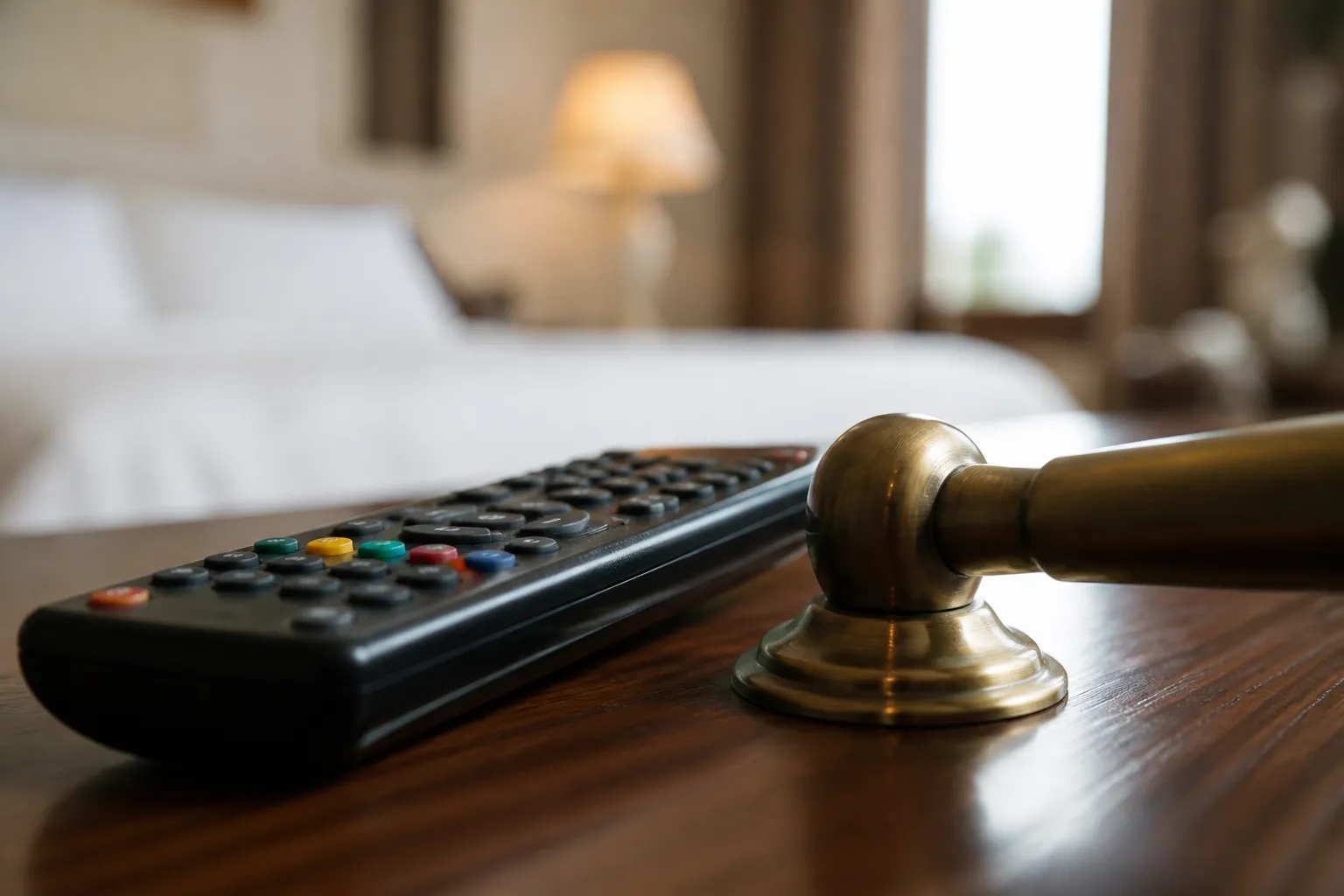
Not every surface in a room carries the same hygiene risk. Some are touched dozens of times a day by different people; others stay untouched for the entire stay. Recognising that difference is the first step towards an effective protocol and towards using the time available in every shift well.
Contents
- Why guests never mention this, but always notice it
- What makes a surface “critical”
- Remote controls and handles: the most overlooked
- Air conditioning units
- Other overlooked critical points
- How often to sanitise critical touchpoints
- Building a map of critical touchpoints
- Training the team to spot these points without a checklist
- Critical touchpoints in common areas
- Periodically reviewing the critical touchpoint map
- A practical example from our experience
- A detail the guest never sees, but that still counts
Why guests never mention this, but always notice it
Guests rarely write a review saying “the remote control felt clean”, because attention to critical touchpoints is invisible by nature: nobody praises what they can’t directly perceive. What they do notice, sometimes without being able to name it, is a general sense of trust in the property’s hygiene, built cumulatively from dozens of small details handled correctly, of which critical touchpoints are one of the most important.
What makes a surface “critical”
A critical touchpoint is a surface touched frequently by different hands, often without the guest even thinking about it: handles, switches, remote controls, thermostats. The risk does not depend on the size of the surface but on how often it is touched: a large table touched once a day is less critical than a small switch touched ten times.
Remote controls and handles: the most overlooked
Sanitising remote controls and handles in hotels is often skipped because nobody considers them a priority compared with more visible surfaces like the basin or the floor. Yet they are among the points with the highest microbial load found in industry studies, precisely because of how often they are touched and how little attention they get. The remote control is a particularly tricky case: full of crevices that are hard to clean thoroughly, often just given a quick wipe.
Air conditioning units
Sanitising hotel air conditioning units deals with a different risk: not direct contact, but the spread of dust, allergens and (in the worst cases) mould through the air. Filters and indoor units need sanitising on a schedule set by the manufacturer, almost always wider than the daily room clean, but it should still be checked at every seasonal changeover, when the unit starts up again after months of inactivity.
Other overlooked critical points
Beyond the most obvious ones, there are less visible critical touchpoints: the toilet flush button, the minibar handle, the landline receiver where one is provided, the shared lift button. None of these is as visible as a stain on the floor, but together they account for a significant share of the overall risk of cross-contamination between different guests.
How often to sanitise critical touchpoints
Unlike general surfaces, critical touchpoints should be sanitised more than once a day in high-traffic common areas (common door handles, lift buttons) while in a guest room one thorough pass at every turnaround is generally enough, barring exceptional situations such as a seasonal flu outbreak.
Building a map of critical touchpoints
The most effective way not to overlook these points is to have a fixed list, attached to the turnaround checklist, with the room’s critical touchpoints listed one by one. Not an optional extra, but a step included in every service, one a supervisor can check with the same attention given to the rest of the room.
Training the team to spot these points without a checklist
The ultimate goal of training isn’t for the team to always follow a paper checklist, but for them to automatically recognise critical touchpoints in any environment after a few weeks, even in a room with an unusual layout or a common area never cleaned before. That’s the sign the sequence has genuinely been internalised, not just memorised.
Critical touchpoints in common areas
The idea of a critical touchpoint isn’t limited to guest rooms: in common areas, the highest-risk points are lift buttons, entrance door handles, staircase handrails and any information kiosk touchscreens. These surfaces, used by hundreds of different people over the course of a day in a mid-sized hotel, deserve a higher sanitising frequency than any critical touchpoint inside a single room.
Periodically reviewing the critical touchpoint map
A refurbishment, the introduction of new in-room technology or simply a change of furniture can shift which surfaces become critical in a property. A map written years ago and never updated risks ignoring new touch points (a smart speaker, a touch panel for the lights) that have since become part of the guest’s everyday experience.
A practical example from our experience
At a mid-sized hotel we worked with, a simple white-cloth test on twenty different remote controls showed that more than half still carried visible traces even after the standard turnaround. After adding the remote control to the fixed list of critical touchpoints, with a dedicated specific product, the same test repeated a month later showed a clear improvement, for an increase of just a few seconds per room and no additional product cost worth mentioning.
A detail the guest never sees, but that still counts
No guest ever checks whether the remote control has been sanitised, but it is exactly this kind of attention (invisible but systematic) that sets a professional cleaning service apart. It is the standard behind our cleaning and sanitising service.
Even a small amount of time spent mapping these points, revisited every time the property changes something about the furniture or in-room technology, stops the highest-risk spots for guest hygiene from being left uncovered.
For an assessment of your property’s critical touchpoints, get in touch.