

Water-saving hotel cleaning: how to achieve it
Published on
4 min read
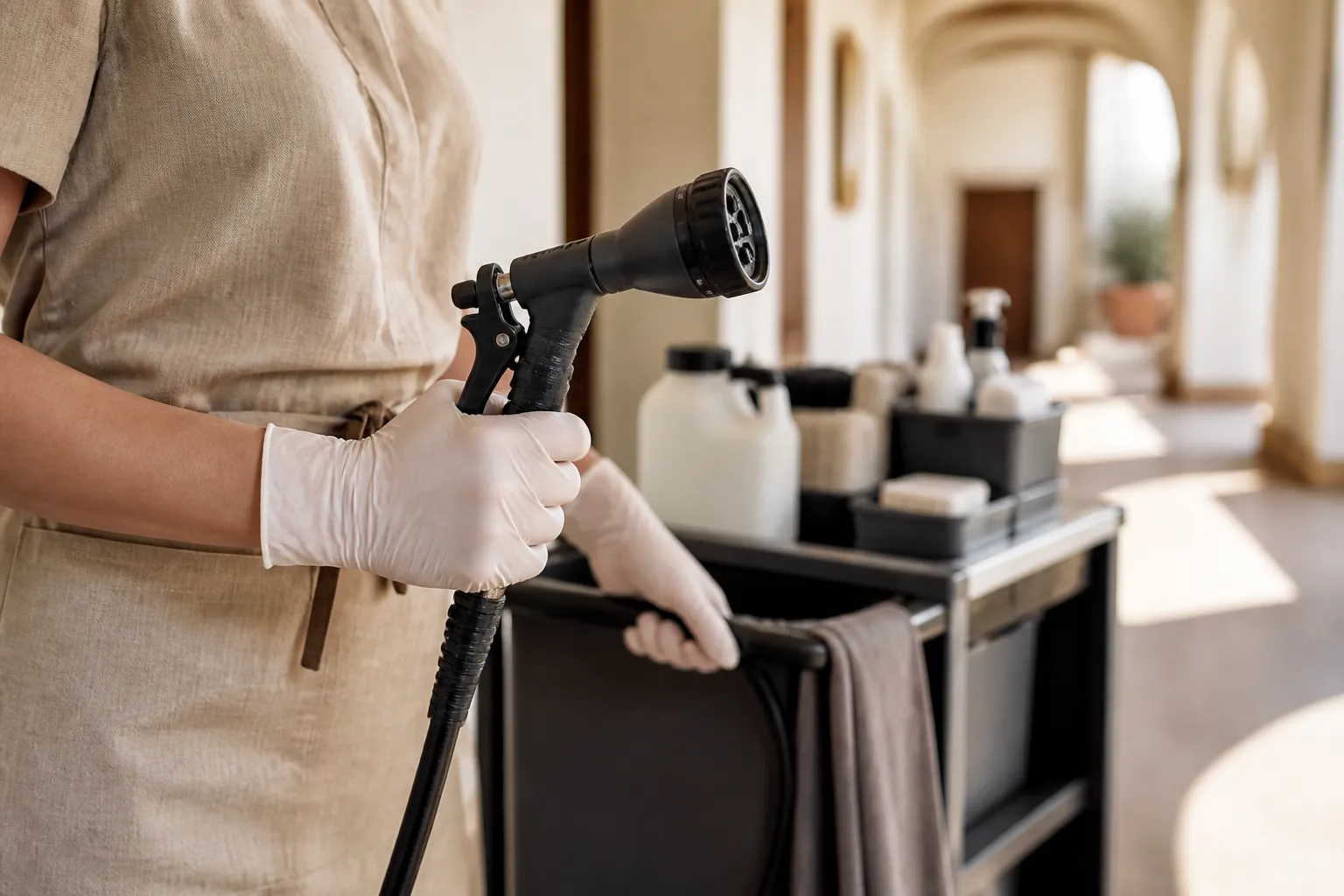
The water used for cleaning is one of the least monitored consumption items in a hotel, despite often representing a significant share of the property’s overall water use. Tackling it usually costs little more than a change in habits and a modest equipment upgrade, which makes it one of the highest-return sustainability investments available to most properties.
Contents
- Where consumption is concentrated
- Low-consumption equipment and procedures
- The case of linen: saving without giving up hygiene
- Cutting plastic, a related issue
- Sustainable product packaging
- Monitoring consumption over time
- Water saving at non-hotel properties
- Involving guests in the effort, without inconveniencing them
- Staff habits matter as much as equipment
- A goal reached by adding up small choices
Where consumption is concentrated
Washing floors, cleaning bathroom surfaces and rinsing equipment and cloths are the activities that use the most water in daily cleaning, alongside the linen wash cycle when handled in-house. At a 50-room hotel, just washing corridor and common area floors can account for a share of water consumption comparable to the rooms themselves, if not managed with the right equipment.
Low-consumption equipment and procedures
Professional low-water-consumption equipment (controlled-spray mops, water dosing systems for floor cleaning) cuts consumption without lengthening working time, contrary to what is often assumed. A controlled-spray mop, for example, dispenses exactly the amount of water and detergent needed for a stretch of floor, eliminating the waste typical of a traditional bucket filled “generously, just in case”.
The case of linen: saving without giving up hygiene
When linen washing is handled in-house, optimising wash cycles (full loads instead of frequent partial ones, low-consumption programmes for lightly soiled items) can significantly cut overall water use without compromising the required hygiene standard. Many Tuscan properties that manage linen in-house have introduced a policy of changing sheets every 2-3 nights for long-stay guests who voluntarily accept it, with a direct impact on both water consumption and the energy costs of washing.
Cutting plastic, a related issue
Cutting plastic use in hotel cleaning is a topic that often overlaps with water saving: refillable containers for detergents, centralised dosing systems instead of single-use bottles, and more careful packaging choices simultaneously reduce waste of product, plastic and (indirectly) the water used for rinsing.
Sustainable product packaging
Sustainable packaging for hotel cleaning products (recyclable containers, concentrated formats that reduce transport volume) is another factor contributing to the overall sustainability of the service, even if less visible than direct water savings. Concentrated formats also reduce the storage space needed in the supply room, a practical benefit often overlooked in the initial assessment.
Monitoring consumption over time
Installing dedicated meters for service areas where possible, or simply comparing water bills month over month against occupancy rates, makes it easy to spot anomalies, such as an undetected leak or a piece of equipment using more than expected. Without regular monitoring, a gradual rise in water consumption can go unnoticed for months.
Water saving at non-hotel properties
For farm stays and holiday homes, often supplied by private wells or a less flexible water supply than an urban property connected to the municipal network, saving water on cleaning isn’t just a sustainability choice but a practical necessity, especially during peak summer months when water availability can be limited. The same low-consumption equipment used in hotels works just as well in these settings, with a proportionally bigger benefit given the more limited supply capacity.
Involving guests in the effort, without inconveniencing them
Many hotels ask guests whether they want daily towel and linen changes or prefer to reuse them for a few days, a simple opt-in system that cuts both water and energy use from laundry without affecting the cleaning of the room itself. Framing this choice around comfort and personal preference, rather than presenting it purely as an environmental request, tends to get a noticeably higher acceptance rate among guests who might otherwise ignore a generic sustainability appeal.
Staff habits matter as much as equipment
Even the best low-consumption equipment loses much of its benefit if staff habits work against it: leaving a tap running while attending to something else, refilling a bucket to the very top “to be safe”, or rinsing a mop under running water instead of using a wringer system. A short practical demonstration during onboarding, showing the correct way to use each piece of water-saving equipment, does more to change these habits than a written policy alone.
A goal reached by adding up small choices
No single measure alone eliminates excessive water use: it is the sum of the right equipment, correct procedures and product choices that produces a measurable result over time. It is the approach we follow in our cleaning service for Tuscan properties.
Want to assess your property’s water consumption from cleaning? Get in touch.